
Infection prevention
Infection control solutions: the simple changes to make before buying more equipment
Good infection control often starts with a handwash station, a product label and a repeatable cleaning rota — not a new machine. Schools, nurseries and workplaces can review these today before deciding whether they need an additional disinfection step.
In short
Put liquid soap, water and drying supplies at every handwashing point; teach a thorough 20-second wash; check that any disinfectant or hand rub has evidence for the organisms and use claimed; and clean high-touch surfaces on a realistic rota. Fogging may add a planned, documented step in suitable unoccupied rooms after cleaning, but it cannot replace these basics.
7 min read ·
1. Make proper handwashing effortless
The NHS recommends washing with soap and water for around 20 seconds: wet hands, apply enough soap, rub palms, backs of hands, between fingers, backs of fingers, thumbs and fingertips, then rinse and dry thoroughly. A disposable towel can be used to turn off the tap. Show and practise the sequence, especially with children and new starters, rather than relying on a poster alone.
This is thorough everyday handwashing, not the surgical hand antisepsis procedure used by clinical teams before an operation. Soap and water physically remove viruses as well as bacteria; an ‘antibacterial’ label is not required for this mechanical removal. In schools, UKHSA advises liquid soap, warm water and paper towels, with hand hygiene after toileting, before eating and after playtime.
- Stock liquid soap and paper towels before the day begins
- Practise palms, backs, finger webs, thumbs and fingertips for about 20 seconds
- Rinse and dry fully; revisit at the moments hands actually become contaminated
2. Read ‘antibacterial’ and ‘antiviral’ claims correctly
‘Antibacterial’ on a bottle is not the same claim as virucidal activity. Ask suppliers for the actual tested claim, the product's intended use and the instructions for concentration and contact time. EN 1499 addresses hygienic handwashing against bacteria; EN 1500 addresses hygienic hand rubs against bacteria; EN 12791 relates to surgical hand disinfection. None of those numbers alone demonstrates efficacy against viruses.
EN 14476 is a virucidal test used for disinfectants and antiseptics, including relevant hand products; check whether the evidence covers the type of virus you are concerned about, the application and the stated contact time. A surface disinfectant's test does not automatically make it suitable for skin. Do not substitute a surface product for soap or a hand product without checking its approved use.
- EN 1499 — hygienic handwash, bacterial efficacy
- EN 1500 — hygienic handrub, bacterial efficacy
- EN 12791 — surgical hand disinfection, not an ordinary school-wash requirement
- EN 14476 — virucidal activity under specified test conditions; verify the claim's scope
3. What does a school handwash observation actually tell us?
In our experience reviewing 80 schools, we found antibacterial-labelled handwash at 75. That observation is from our own work, not a published controlled study, and we have not independently verified the products’ full test documentation. The label alone cannot establish whether a particular wash has a virucidal claim — or whether it contributed to an outbreak.
It would be wrong to call those bottles the dominant cause of recurring viral infections. Ordinary soap and water still remove viruses when used correctly. What the observation does show is a useful procurement question: if you are paying for an antimicrobial claim, do you know which organisms it covers? Then check whether staff and pupils have the time, supplies and habits needed to wash properly.
4. Do not rely on hand gel for vomiting bugs
UKHSA’s guidance for children and young people’s settings says alcohol hand gel is not effective against organisms that cause gastroenteritis, such as norovirus. Make soap-and-water washing the default after the toilet, vomiting or diarrhoea and before eating. Follow your local outbreak instructions on isolation, cleaning and when people can return.
A product might have a specific virucidal test claim, but that never removes the need to follow the setting’s infection-control guidance. Pair handwashing with appropriate surface cleaning and, for respiratory illness, ventilation and staying away when unwell.
5. Add room treatment only where it solves a defined problem
After hand hygiene and manual cleaning are working well, an organisation may choose to plan additional whole-room disinfection in suitable unoccupied spaces such as a treatment room, welfare area or classroom outside opening hours. The purpose is to complement the existing routine, not to claim that one treatment prevents all future transmission.
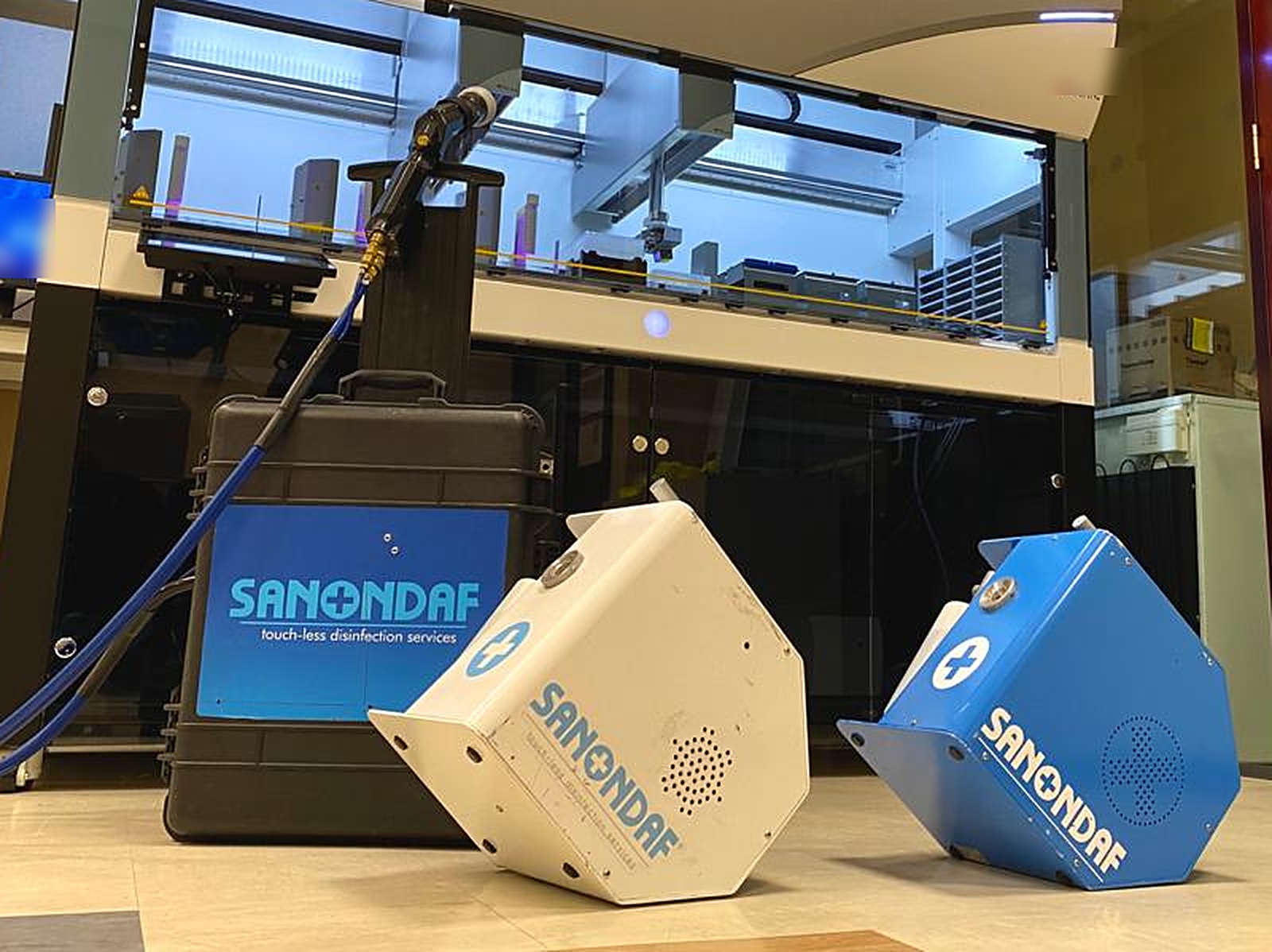
Sanondaf leases equipment to approved organisations with trained operators and documented procedures. A dated treatment record can show the work done, while the site's normal cleaning, safe ventilation and staff behaviour continue every day.
Frequently asked
- Does an antibacterial handwash fail to remove viruses?
- No. Washing with soap and water physically removes viruses when done properly. An antibacterial claim does not by itself prove chemical virucidal activity, but the lack of that claim does not mean soap-and-water washing is ineffective.
- Which EN standard should I ask about for viruses?
- Ask for the relevant EN 14476 virucidal test evidence, including the viruses or claim category, use type, concentration and contact time. EN 1499 and EN 1500 concern antibacterial handwashing and hand rub efficacy, while EN 12791 concerns surgical hand disinfection.
- Should a school teach children to wash like a surgeon?
- Teach the thorough NHS 20-second technique, including thumbs, fingertips and between fingers. A surgical scrub is a different clinical procedure and is not needed for ordinary school handwashing.
Sources and further reading
- NHS: how to wash your hands
- UKHSA: preventing and controlling infections in children’s settings
- NHS Scotland: review of hand hygiene products and standards
- BS EN 14476:2025 standard scope
Commercial terms are confirmed at survey. Product efficacy depends on the validated application and conditions.