
Infection control
What is infection control — and why is it important?
Infection control sounds like a hospital term, but it applies to any organisation where people share space — offices, schools, care homes, factories, vehicles and ships. This guide explains what it means in plain terms, why it matters, and the practical layers that make it work.
In short
Infection control is the set of practices that stop infections spreading between people, surfaces and environments. It rests on standard precautions — hand hygiene, cleaning and disinfection, safe handling of waste and linen, appropriate protective equipment and managing people who are unwell. It matters because it protects health, keeps staff at work, maintains trust with customers and keeps operations running.
6 min read ·
What does infection control mean?
Put simply, infection control means breaking the chain of infection: the route a germ takes from one person, through hands, air or surfaces, to the next. Every measure — washing hands, cleaning a desk, isolating a poorly colleague — is about breaking one link in that chain.
What are the standard infection control precautions?
In UK health and care settings, these are known as standard infection control precautions (SICPs). They are applied by everyone, every time, regardless of whether an infection is known. Our NHS guide covers how disinfection fits into clinical cleaning plans in more detail.
- Hand hygiene
- Respiratory and cough hygiene
- Personal protective equipment
- Safe management of the care environment, including cleaning
- Safe management of equipment, linen and waste
- Managing blood and body fluid spills
- Occupational safety, such as sharps
- Placing and assessing people who may be infectious
Why is infection control important?
Because illness spreads fastest where people share space. A single outbreak can close a ward, a classroom or a production line and leave teams short for weeks. Good infection control protects vulnerable people, reduces staff absence and gives customers, patients and parents confidence the building is looked after.
- Protects vulnerable people and staff
- Reduces sickness absence and disruption
- Supports compliance and audit trails
- Builds visible trust with customers and visitors
How do organisations put infection control into practice?
Start with the low-cost basics: good handwashing, products with suitable virucidal claims, and a cleaning schedule focused on high-touch surfaces. Then add a planned disinfection step for shared rooms and an outbreak plan so the response is fast when illness appears.
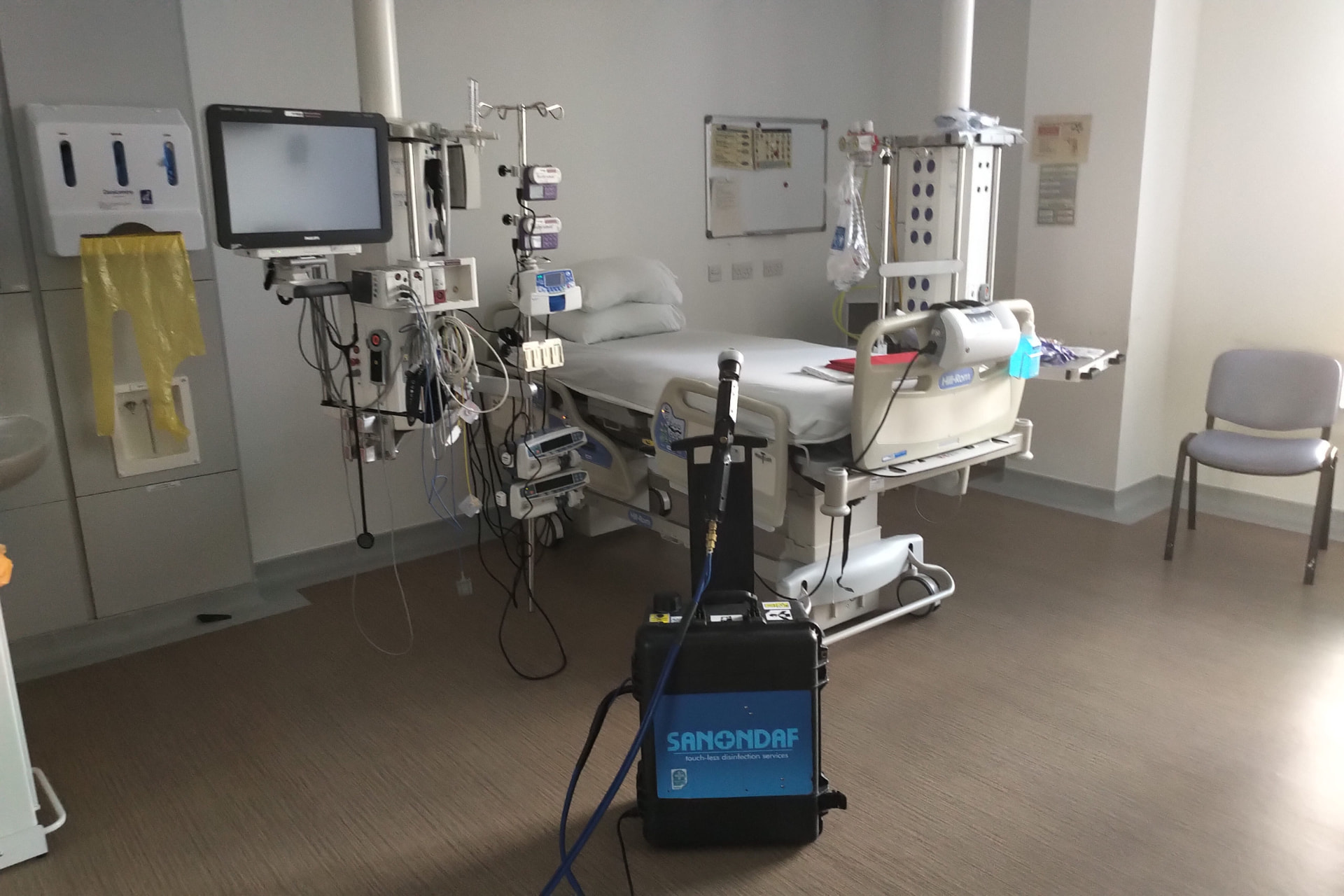
A leased Sanondaf fogger gives your own trained staff that disinfection step on site. Rooms are cleaned first, then treated while unoccupied, with a sign on the door and a treatment record afterwards — and no rise in lease cost however many rooms you treat.
Frequently asked
- Is infection control only for hospitals?
- No. Any shared environment benefits — care homes, schools, offices, food production, transport and hospitality.
- How many standard infection control precautions are there?
- UK national guidance groups them into a set of core precautions covering hand hygiene, respiratory hygiene, PPE, the care environment, equipment, linen, waste, spills, occupational safety and patient placement. Check your national manual for the exact list used in your setting.
- Does disinfection fogging replace other precautions?
- No. It supports cleaning and hand hygiene as a supplementary, risk-assessed step in unoccupied rooms.
Sources and further reading
Commercial terms are confirmed at survey. Product efficacy depends on the validated application and conditions.