Approved organisations only

Lease a Sanondaf machine for immediate in-house response

Some organisations cannot wait for anyone to arrive. Leasing puts validated decontamination capability inside your own estate — operated by your specifically trained staff, on your own group sites, under a documented agreement. The same technology is leased and used by our hybrid service teams across NHS England and Scotland, county councils and some of the UK's largest companies and institutions. If you are unsure how to approach a particular event, we can also attend with a couple of machines at a reduced rate to help organise, supervise or run the first treatment alongside you.

Lease snapshot
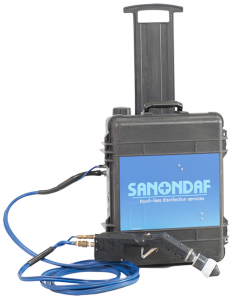
Sanondaf portable electrostatic fogging machine in its transport case with hose and spray gun
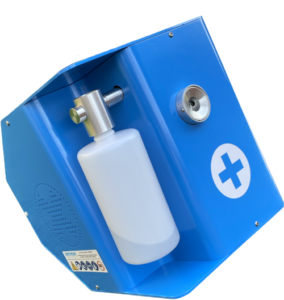
Sanondaf disinfection unit head with chemical bottle and spray nozzle

See the machine in action

A quick look at how the system works

Watch the fogging process and see how a small, portable unit treats a whole room in minutes — no wipes, no wet residue, no waiting for a contractor.

Interested in leasing our machines?

Sectors we lease to

  • Medical centres, clinics, dental practices and NHS departments
  • Care homes, supported living and housing association stock
  • Laboratories, aseptic suites, cleanrooms and biosafety cabinets
  • Food production, processing, packing and cold storage sites
  • Transport centres, depots, fleet and emergency vehicle operators
  • Universities, colleges, halls of residence and student accommodation

Who we cannot lease to

  • Private individuals and households
  • Unregistered traders or sole operators without approval
  • Sub-letting, resale or off-site hire to third parties
  • Any site not named on the agreement

Leasing is granted at our discretion to sectors we select. Every applicant is vetted before an agreement is offered.

What the lease includes

Supported, calibrated, warranted

Operator training
On-site training on safe use, included at the start of the lease. Only staff trained and deemed competent may operate the unit, and only operators we have trained may train others. Additional on-site training visits are from £450 + VAT each.
Full warranty
Covered throughout the lease. If we cannot repair on site, we replace the unit.
Calibration & inspection
Two visits a year included, confirming the machine operates within acceptable parameters. Other callouts are chargeable.
Technical support
Direct line to our operators for application questions, dilution, contact times and validation queries.
SanoChem supply
Approved disinfectant supplied from Sanondaf UK in 100-litre increments. No other chemical may be used — it risks the machine and operator and invalidates the efficacy data.
Site-specific use
Non-transferable: the machine is leased for room disinfection at the sites named in your agreement only.

Commercial terms

The lease at a glance

Indicative terms based on our standard equipment hire agreement. Final figures depend on unit type, number of sites and training requirements, and are confirmed in writing before signature.

Standard term
36 or 48 months, renewable on 30 days' written notice
Indicative lease payment
From £450–£550 per month + VAT, payable in advance on the 1st
At the start
Three months' lease payments are required upfront, with a minimum initial SanoChem order of 100 litres unless otherwise authorised
Equipment
Sanondaf fogging or electrostatic spray unit, supplied new — the fogger weighs just 8kg and is hand-carried by one person
Chemical
SanoChem from £15 per litre + VAT, minimum 100 litres per year
Staffing
No additional staff cost — responsible staff you already employ are trained by us and the role is built into their existing job description and rota
Ownership
The machine remains the property of Sanondaf UK throughout
Risk & cover
The hirer covers loss, theft or damage and replaces the unit if beyond repair

How leasing works

From approval to first treatment

  1. 01

    Approval

    We confirm your organisation, sector and the sites the machine will serve.

  2. 02

    Paperwork

    Lease term, monthly payment, named sites and chemical supply are set out in writing.

  3. 03

    New unit

    A brand-new fogger is allocated to your lease — not a shared or ex-hire machine.

  4. 04

    Site survey

    We walk the areas you intend to treat and set room volumes, dwell and re-entry times.

  5. 05

    Delivery & training

    The unit is handed over and your nominated staff are trained and signed off.

  6. 06

    Chemical & follow-up

    SanoChem is supplied on a schedule that suits your usage, with follow-up visits agreed on frequency.

Where the value sits

What a machine on site saves you

Most organisations come to leasing after totting up what reactive callouts, contractor waiting time and closed rooms actually cost them over a year.

One-off callouts add up
A single attended remediation visit on a mould or contamination job typically runs from around £495 for a half-day up to £1,095 where a full day and multiple rooms are involved. A handful of those in a year already approaches the cost of holding a machine on site permanently.
No waiting, no travel charges
Your own trained operators treat the room the same shift. No callout premium, no out-of-hours uplift, no waiting for a contractor slot when a ward, kitchen or vehicle is out of service.
Downtime is the real cost
Rooms, cold rooms, vehicles and cabinets come back into service inside the hour rather than sitting closed for a day. For a bed, a production line or an ambulance, that recovered time usually outweighs the lease itself.
Unlimited use within your estate
The lease payment is fixed. Whether you treat one room a month or run a full site programme across every named site, there is no per-room fee — only chemical.

On site versus called out

Five minutes, or somewhere between six and twenty-four hours

Leased machine, your own operator

5 minutes

  • Room vacated and sealed by your staff
  • Machine wheeled in from the store cupboard
  • Volume set, cycle started, dwell runs unattended
  • Re-entry typically inside the hour

Calling out any external provider

6–24 hours

  • Report the incident and wait for triage
  • Wait for an available slot, often next working day
  • Travel to site, then estates, permits and signing in
  • Unload and move equipment to the affected area

What a room actually costs you

One machine comfortably treats up to 5 rooms per hour depending on their size. But for example, consider two rooms a day — around 60 rooms a month — without any per-room fee. Take the monthly lease payment, divide it by the rooms you treat, add the chemical used, and that is your true cost per room.

from £500 monthly lease payment + VAT ÷ 60 rooms = £8.33 per room

+ SanoChem used (from £15 / litre + VAT)

from ≈ £10–£12 per treated room + VAT

Indicative only — actual figures depend on your lease payment, room volumes and usage. We will work the sums through with you against your own room list.

Against a single callout

An attended remediation visit typically runs from around £495 for a half day up to £1,095 where a full day and several rooms are involved. On the per-room maths above, that one visit is roughly the same money as treating an entire building — and you still waited for it.

One attended half-day visit
from £495
One attended full-day visit
up to £1,095
60 rooms on a leased machine
from ≈ £500 + VAT + chemical

Time back for your team

One trained team. Fewer hand-offs.

For your organisation, a machine already on site means approved areas can be treated on your timetable. In an urgent situation, a trained colleague may be able to start within around ten minutes once the area is prepared — while an external booking may still be awaiting a quote, approval or arrival. Your own signed-off team follows your site standards rather than having to brief a new visitor on them each time.

Stage
External visit
Machine on site
Arrange
Find availability, agree a quote and authorise the job or purchase order.
Your trained operator follows the agreed site procedure.
Access
Wait for arrival, then arrange sign-in, induction, access and an escort.
The machine and trained colleague are already on site.
Treat
Brief the provider, stay available, then check the work against your site standards.
Prepare and clear the area, then follow a familiar, approved treatment cycle.
Close out
Sign out, review the report and process the invoice for the visit.
Record the treatment and follow dwell and safe re-entry rules.

In-house does not mean skipping safeguards: cleaning first, trained operators, your risk assessment, exclusion, dwell time, re-entry checks and a treatment record still apply. A room may be ready within the hour where the validated process and site conditions allow; this is not a guaranteed turnaround.

Complements the process already in place

Clean as you do now, then close the task with an additional disinfection pass

This does not replace cleaning, descaling, waste removal or physical biofilm removal. Once that work is complete, a selected trained operator can use the electrostatic sprayer for an additional broad-spectrum disinfection step. For a small item or defined work area, it may add only around one minute to the existing process.

Clean first

Existing cleaning, descaling, waste removal and physical biofilm removal stay exactly where they belong in the process.

Add broad-spectrum coverage

A selected trained operator uses the electrostatic sprayer on the cleaned item or defined area as a quick additional disinfection step.

Close and record the task

Log the area, date, operator and machine, creating a consistent record that complements the organisation’s existing paperwork.

A solid, documentable close to the process

The treatment can be logged against the area, date, operator and machine, then included in a dated certificate or grouped report. Supervisors gain evidence that the conventional clean was followed by a consistent additional disinfection step. Site procedures, manufacturer instructions and current sector requirements always take precedence.

Plan, don't just react

At £10–£12 a room + VAT you stop rationing disinfection

The moment the machine is yours to use, you are no longer waiting for an outbreak to justify the spend. Rooms get treated during normal downtime, on a rota, before anyone is ill — and the areas that never made the budget finally get covered.

  • Treat the offices, not just the labs
  • Treat the canteen, not just the operating theatres
  • Treat the staff room, changing rooms and toilets on a schedule
  • Treat void rooms and student flats between occupants
  • Treat vehicles at the end of a shift, not after an incident
  • Treat cold rooms, fridges and HVAC as planned maintenance

Import, export & cold chain

Treat the load in transit, not on arrival

Goods crossing borders sit through repeated temperature and humidity swings — exactly the conditions that encourage mould and bacterial growth — and can be exposed to organisms your site has never had to deal with. With a machine of your own you can place a unit in the trailer, container or cold room, treat the whole volume while it travels or stands, and know that when the doors are opened the load and the space are safe.

Pair a fogger with an electrostatic unit for targeted surface work and you have a level of routine infection control ahead of many clinical environments — applied to your own timetable, at your own cost per room.

How it compares

Why organisations choose this system

We won't run down other suppliers — but it is worth understanding how touch-less dry fogging differs from the UV towers, wheeled vapour units and hand-held sprayers most teams have already tried.

Whole-volume, not line-of-sight
UV-C towers and hand-held sprayers only disinfect what they can reach or see. A dry fog fills the whole room volume — behind equipment, above ceiling voids, inside crevices — with no shadowed surfaces left untreated.
Dry, not wet
Many popular systems leave surfaces visibly wet, need wiping down afterwards, or force long dry-out periods. Our fog leaves no residue and no moisture, so electronics, monitors, keyboards and lab instruments stay in place.
No corrosion, no bleaching
Chlorine and quaternary-based fogging can corrode metals and mark fabrics. SanoChem breaks down to water and oxygen, so it is used routinely in critical care, labs and food environments.
Portable, not a trolley
Several competing units are large wheeled machines that cannot easily be lifted into a vehicle, a cold room, a loft space or a domestic property. Ours travels in a case in the back of a van.
One machine, many applications
The same unit covers wards and side rooms, biosafety cabinets, ambulances and fleet, HVAC and ductwork, walk-in cold rooms, fridges, kitchens and mould-affected housing stock.
Evidence you can put in a file
Independent EN test data, dwell and re-entry times and a repeatable method mean the treatment stands up in a risk assessment or audit — not just a product claim.

Your obligations

Conditions of approval

  • Be a registered company or organisation, approved by us for application
  • Complete your own risk assessment for the treatment areas
  • Put an SOP in place that every operator reads and signs
  • Keep the machine in good repair and use it only as designed
  • Order SanoChem from us — minimum 100 litres per calendar year
  • Use the unit only at the sites named in the agreement; no sub-letting or assignment
  • Report any equipment issue at the earliest opportunity

How approval works

  1. 1. Enquiry — tell us your organisation, sites and intended use.
  2. 2. Vetting — we confirm company registration, sector suitability and site conditions.
  3. 3. Agreement — term, monthly lease payment, named sites and chemical supply are set out in writing.
  4. 4. Delivery & training — the unit is installed and your nominated staff are trained and signed off as competent.
  5. 5. Ongoing support — scheduled calibration, chemical resupply and technical backup.
Start a leasing enquiry

This is a lease — you are not buying the equipment. Full terms are provided before signature.

Included with every lease · coming October 2026

Your own leasing account area — documents, payment schedule and machine training in one place

Leasing should not mean chasing paperwork. From October 2026 every lease client gets a private, password-protected account area at no extra cost. It is built around the two questions we get asked most: where does the account stand, and how exactly do we look after the machines?

Your signed leases and dates, in one place

Open the signed lease document itself, see the start and end dates, machine count and monthly figure, and get a warning well before a term ends.

A payment schedule with a traffic light on every month

Every payment for the full length of the lease is laid out in advance — green for received, amber for due, red for missed. No guessing where the account stands, and you can request a copy of any invoice in one click.

How-to and maintenance library for your machines

Step-by-step operating instructions and the after-use, weekly and monthly maintenance schedule for both the fogger and the electrostatic sprayer — with troubleshooting, so a new starter is competent the same shift.

Request extra machines without an email chain

Raise a request for another machine on a site, and it reaches us immediately for authorisation and a delivery date. You can see exactly where the request has got to.

Card and direct debit payments are not taken in the account area — invoicing stays with our accounts process. The schedule simply shows what is due and what has been received.

Fits your existing process

It blends into the cleaning schedule you already run

Your own janitors, cleaning staff or housekeepers build fogging into their normal daily, weekly, monthly, quarterly or annual rounds. There is no separate programme to manage and no new headcount — the machine simply travels with the round.

  1. Step 1

    Finish the clean as normal

    Your team completes the standard cleaning process exactly as they do today — nothing is removed from the existing method or routine.

  2. Step 2

    Drop the machine in, sign on the door

    Set the volume, start the cycle and hang a small do-not-enter card showing the safe entry time. The room is then working on its own.

  3. Step 3

    Leapfrog to the next room

    Move on and clean the next room. When that one is done, the machine moves into it and the previous room reopens — a simple rolling leapfrog down the corridor.

  4. Step 4

    Seconds per room, not minutes

    Done this way it adds only a few seconds of handling per room, and each of those rooms gets a full hospital-grade decontamination rather than a surface wipe.

Where we can lease

UK-wide support, coordinated from Shropshire and the West Midlands

Your lease, training and ongoing support is coordinated from the Shropshire & West Midlands office, backed by the wider Sanondaf support network across the UK and further afield. If your group has sites elsewhere, a machine can very often be leased there too, with the same training, calibration and preventative treatment programme — so one policy covers every site rather than one region.

United Kingdom & Islands

  • 12 offices across the UK, plus a further six in Scotland
  • Coverage across many areas of Northern Ireland and Wales
  • Channel Islands

International offices able to lease

  • Iceland
  • Malta
  • Lebanon
  • Thailand
  • Mexico
  • South Africa
  • USA

New regions and countries are opening every few months. Tell us where your sites are and we will confirm what can be covered today.