
Clean first
Existing cleaning, descaling, waste removal and physical biofilm removal stay exactly where they belong in the process.
The technology you lease
Every leased machine uses the same touch-less system Sanondaf has run across NHS clinical settings, labs, theatres and sterile services for over ten years — dry fog and electrostatic spray, paired with a patented hydrogen peroxide disinfectant. The same technology is leased and used by our hybrid service teams across NHS England and Scotland, county councils and some of the UK's largest companies and institutions.
See leasing options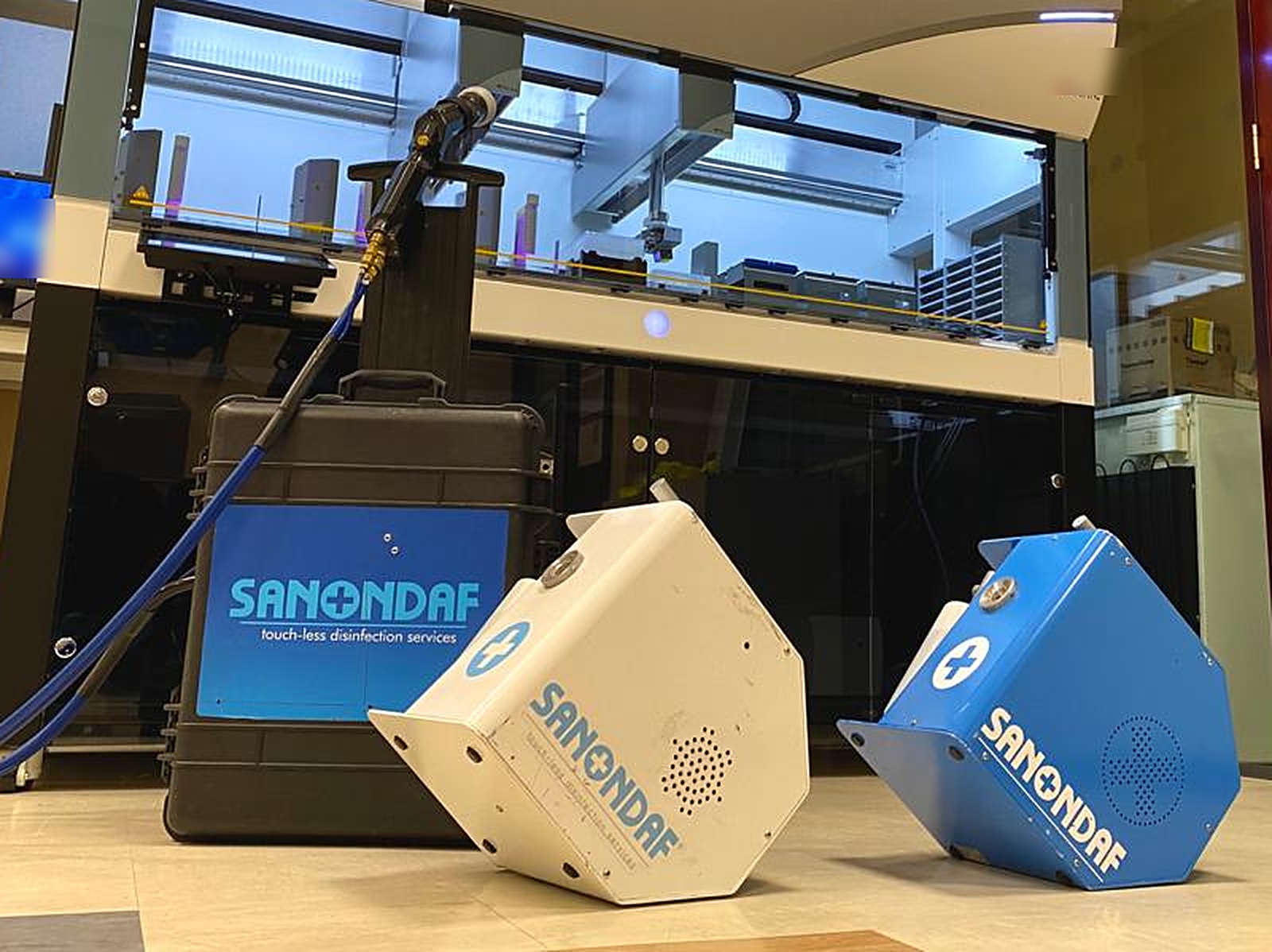
Complements the process already in place
This does not replace cleaning, descaling, waste removal or physical biofilm removal. Once that work is complete, a selected trained operator can use the electrostatic sprayer for an additional broad-spectrum disinfection step. For a small item or defined work area, it may add only around one minute to the existing process.
Existing cleaning, descaling, waste removal and physical biofilm removal stay exactly where they belong in the process.
A selected trained operator uses the electrostatic sprayer on the cleaned item or defined area as a quick additional disinfection step.
Log the area, date, operator and machine, creating a consistent record that complements the organisation’s existing paperwork.
The treatment can be logged against the area, date, operator and machine, then included in a dated certificate or grouped report. Supervisors gain evidence that the conventional clean was followed by a consistent additional disinfection step. Site procedures, manufacturer instructions and current sector requirements always take precedence.
Time back for your team
For your organisation, a machine already on site means approved areas can be treated on your timetable. In an urgent situation, a trained colleague may be able to start within around ten minutes once the area is prepared — while an external booking may still be awaiting a quote, approval or arrival. Your own signed-off team follows your site standards rather than having to brief a new visitor on them each time.
In-house does not mean skipping safeguards: cleaning first, trained operators, your risk assessment, exclusion, dwell time, re-entry checks and a treatment record still apply. A room may be ready within the hour where the validated process and site conditions allow; this is not a guaranteed turnaround.
Total area disinfection
An ionising turbine turns the disinfectant into a dry fog. The vapour fills the room and is drawn into every crevice and corner, reaching air and surfaces that manual cleaning cannot — with no wet surfaces left behind.
Targeted surface disinfection
A patented nozzle adds an electrostatic charge as the solution is applied, so it wraps around and clings to each surface. Used to target the hot spots where cross-contamination risk is highest.
Hydrogen peroxide + silver
Free oxygen radicals attack the cell membrane, while silver ions bind to DNA and enzymes to halt replication and metabolism. Hospital-grade, odour-free, and manufactured to ISO 9001 / 13485 standards.
Performance
Evidence
Dispersed as a dry vapour, the solution holds the following EN certifications — the detail your risk assessments and audits usually ask for. Sanondaf is ISO 9001, ISO 14001 and ISO 45001 accredited.
| Standard | Assessed for | Requirement |
|---|---|---|
| BS EN 14476 | Virucidal | 4 log (99.99%) |
| BS EN 1276 | Bactericidal | 5 log (99.999%) |
| BS EN 1650 | Fungicidal / yeasticidal | 4 log (99.99%) |
| BS EN 13704 | Sporicidal | 3 log (99.9%) |
| BS EN 14348 | Mycobactericidal | 4 log (99.99%) |
| BS EN 13697 | Food applications | 4 log (99.99%) |
Tested against
Part of an extensive tested pathogen list covering bacteria (gram-positive and gram-negative), yeasts, fungi, protozoa and viruses with and without a protective coat. Full validation packages are available on request for your risk assessment.
In the field
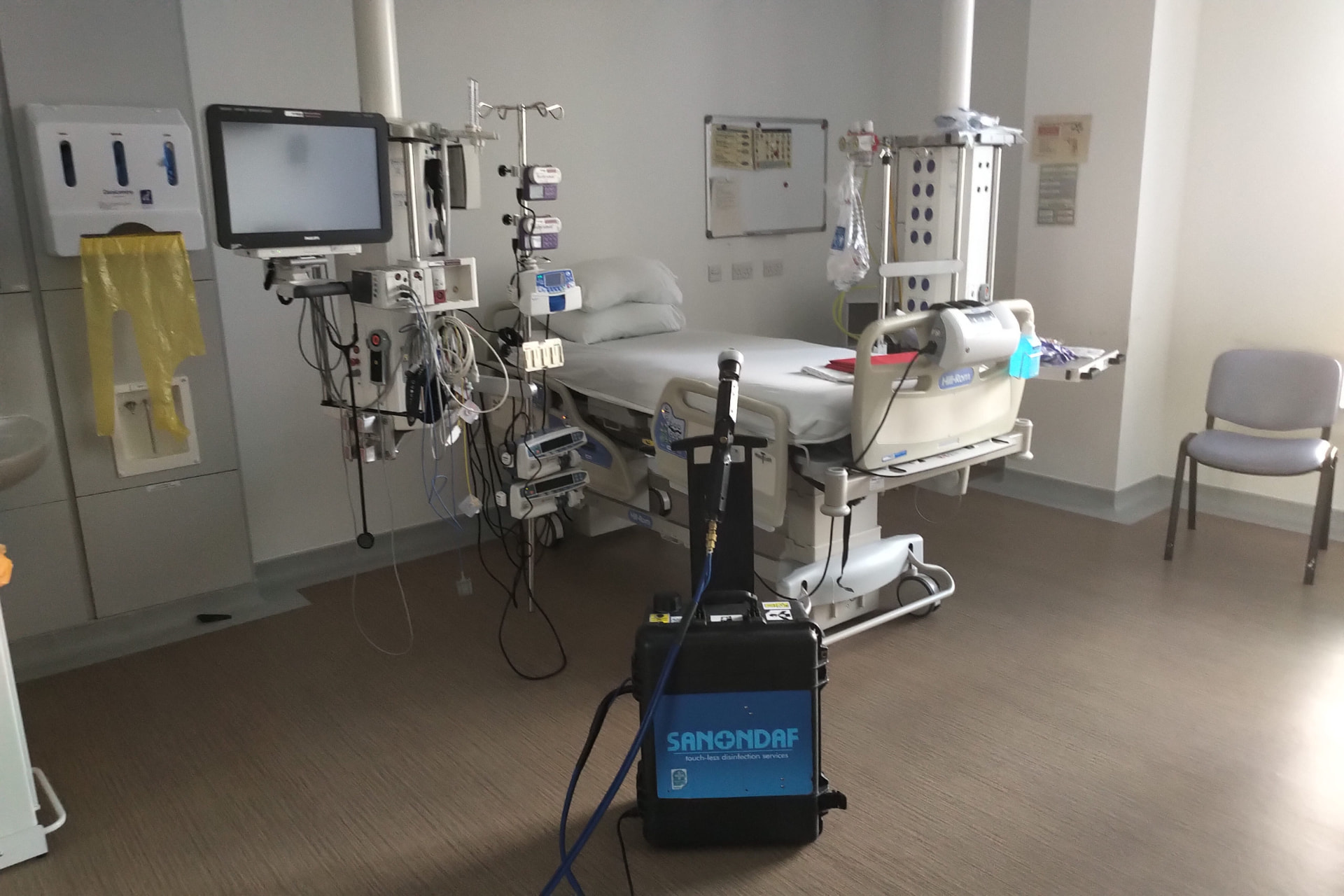
NICU, PICU, ICU, renal, theatres and any area with immune-compromised patients or high-risk organisms such as CPE, VRE, C. auris and biofilms.
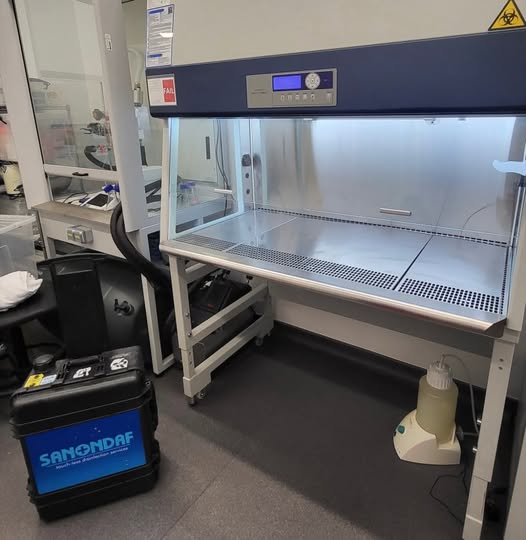
Whole-room or cabinet decontamination before maintenance and after hazardous work or spills, in line with BS EN 12469. Equipment back in use within the hour.
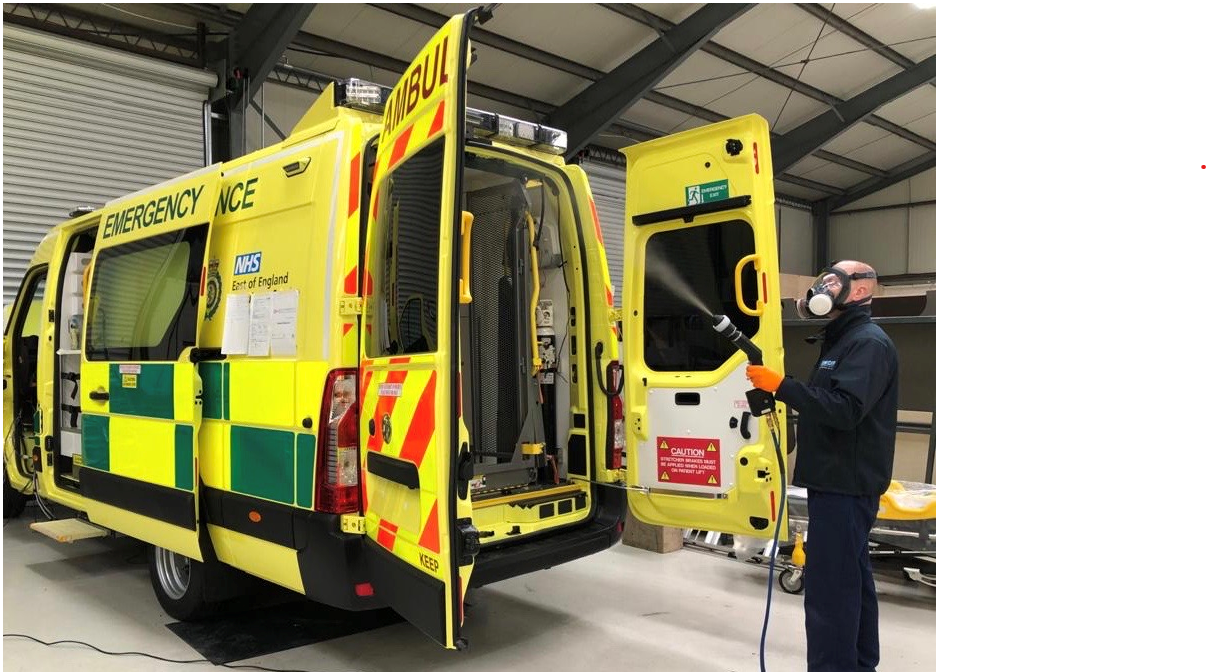
Ambulances, police and fire vehicles, buses and depot fleets — interiors treated between shifts without wiping down every surface.
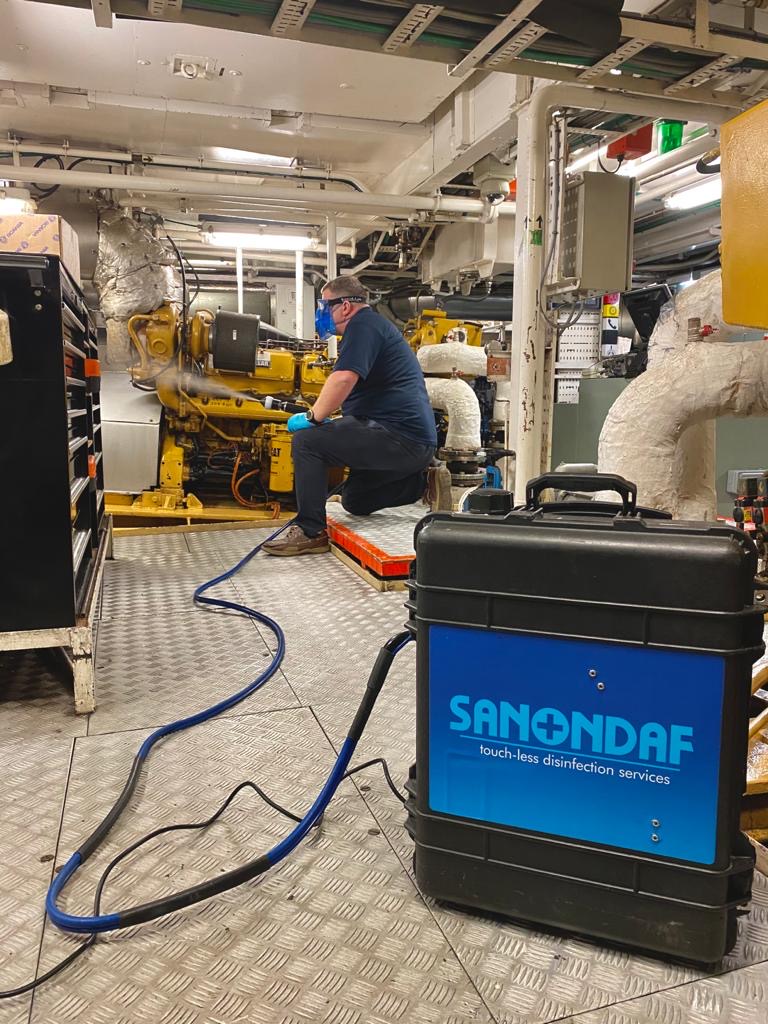
Engine rooms, bridges, cabins, food production areas, student accommodation and hospitality — sealed environments where manual cleaning cannot reach every surface.
Beyond the room
Approved organisations lease the machines, train their own operators and treat their own sites on a routine schedule or the moment an outbreak is confirmed. If you are unsure how to handle a particular event, we can also attend with a couple of machines at a reduced rate to help organise, supervise or run the first treatment alongside your staff.
Apply for approval