
Infection science
How bacteria spread and cause infection: beyond a visibly clean surface
Bacteria are part of everyday life, not a single enemy with a single solution. Many are harmless or beneficial, but some can cause infection when they reach the wrong place or a vulnerable person. Understanding that distinction helps organisations focus on genuine risks instead of assuming that a strong-smelling product or a spotless floor proves a building is safe.
In short
Bacteria are cells; some cause disease, while many do not. Transmission can involve touch, food, water or respiratory routes depending on the organism. Infection differs from harmless carriage. Some bacteria form resistant spores or biofilms, so effective control requires route-specific precautions, physical cleaning and suitable validated disinfection rather than a universal spray-and-wipe promise.
8 min read ·
Bacteria, colonisation and infection are not the same thing
People normally carry communities of microorganisms on their skin and in parts of the body such as the gut. Finding bacteria is not automatically evidence of illness. Colonisation describes organisms being present without necessarily causing disease. Infection involves an organism establishing itself in a way that causes harm or a clinically important response. Location, organism and host susceptibility all matter when interpreting a finding.
MRSA illustrates the distinction clearly. The NHS explains that MRSA bacteria can live harmlessly on the skin without symptoms, but can cause serious infection if they get inside the body. A cut, surgical wound or other opening can provide an entry route. This is why a positive screening result and a wound infection are different situations, and why medical decisions should not be made from an environmental cleaning claim.
How do bacteria spread between people and environments?
The route depends on the organism. MRSA mainly spreads through touch, including contact with a person carrying it or something they have touched. In a shared setting, hands can link a contaminated item to another person or another surface. Some bacterial infections are associated with contaminated food or water, while others involve respiratory transmission. There is no scientifically sound single route for all bacteria.
Think about pathways rather than simply counting dirty objects. A handle can be a transfer point, but contamination still has to reach a susceptible site for infection to occur. Healthcare teams therefore combine hand hygiene with wound care, safe equipment handling and appropriate environmental controls. Food businesses also need their own food-safety procedures, temperature controls and safe preparation practices: a general room treatment cannot substitute for those systems.
What happens when bacteria cause disease?
A disease-causing organism may enter through a wound, be swallowed or reach another suitable site. Bacteria can multiply where conditions permit, and the infection may remain local or become more serious. Some organisms cause harm partly through toxins; others through invasion and the resulting inflammatory response. The details differ substantially, so an infection-control plan should identify the likely organism and route instead of treating all exposures as identical.
The NHS highlights greater MRSA infection risk with broken skin, long hospital stays and weakened immunity. People who are unwell or have invasive devices can need extra protection. New or worsening symptoms require appropriate medical assessment, and serious illness should not be managed by cleaning a room and waiting. Environmental hygiene helps prevention; it does not treat a bacterial infection inside a person.
Why do growth conditions matter?
Unlike viruses, bacteria are cells and many can reproduce independently when their surroundings provide suitable conditions. Nutrient availability, moisture, temperature and other factors influence growth, but requirements vary by species. A universal claim that all bacteria double every twenty minutes is misleading. Conditions in a laboratory growth medium are not the same as those on a dry office desk or in a properly managed refrigerator.
For facilities teams, control means removing soil and food residues, dealing with standing water, maintaining equipment and following relevant storage procedures. A surface can look dry while contamination persists, and a wet or dirty niche can provide more favourable conditions for some organisms. Cleaning frequencies should reflect the actual activity and risk. An occasional intensive clean is not a substitute for managing the environment between those visits.
What are bacterial spores, and why are they different?
Some bacteria can form highly resistant survival structures called spores. They are not a feature of all bacteria, and they should not be confused with fungal spores. Spore-forming bacteria include organisms relevant to healthcare disinfection, such as Clostridioides difficile. A product described as antibacterial does not automatically have a demonstrated sporicidal effect. The claim must match the target and the conditions of use.
CDC disinfection guidance explains that microorganism type and the amount of contamination influence how well treatment works. Spores can be more resistant than actively growing bacterial cells. For a suspected or confirmed spore-related problem, staff should use the organism-specific procedure required by their setting, including the correct cleaning and disinfection products. More chemical or a longer-looking spray is not a substitute for evidence of suitability.
What is a biofilm, and can fogging remove it?
A biofilm is a community of microorganisms attached to a surface within material they produce. CDC describes biofilms as tightly attached communities that cannot easily be removed and may protect microorganisms against disinfectants. Examples occur in water systems and on some medical devices. This is a distinct issue from an isolated bacterium on an exposed worktop, and it can require maintenance, access and specialised cleaning.
A general room fogging treatment should not be presented as removing biofilm from pipes, drains or equipment channels. Chemical exposure does not physically take away a mature deposit or establish that the inside of a device has been processed correctly. Follow engineering and manufacturer procedures, investigate recurring contamination and ensure the chosen method can reach the affected site. Repeated surface treatment without investigating the source can miss the real problem.
Why deep cleaning is important but may not be sufficient
CDC states that organic matter can interfere with disinfectants chemically or protect microorganisms as a physical barrier. Thorough cleaning is therefore part of effective disinfection, not its competitor. Deep cleaning can remove substantial contamination, but its outcome depends on access, method, execution and what happens afterwards. A visually clean room does not certify the absence of pathogenic bacteria, and new hand contact can reintroduce contamination.
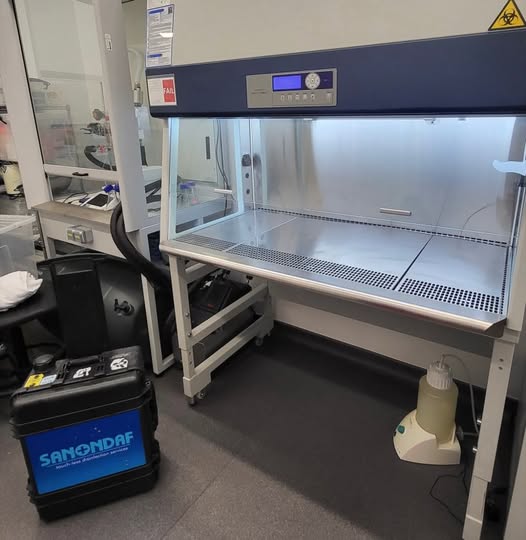
For a suitable Sanondaf organisational programme, any proposed supplementary disinfection should be assessed against product-specific evidence and applicable safety instructions. Staff should use the specified equipment and solution in an unoccupied prepared room, follow application, contact-time and safe re-entry requirements, and record completion. It does not sterilise every item, remove soil or replace clinical device decontamination. Claims must refer to relevant tested organisms and conditions rather than a promise that every bacterial risk has disappeared.
CDC also distinguishes older routine fogging advice from newer decontamination technologies and does not offer a blanket recommendation for the latter. The appropriate decision is site-specific. Leasing can give approved organisations access for planned treatments with trained staff and hybrid attendance when additional supervision is needed. The strongest conclusion is not that conventional cleaning fails: it is that cleaning, suitable disinfection, maintenance and human infection-control practices work as complementary layers.
Frequently asked
- Does carrying bacteria mean someone is infected?
- No. Colonisation can occur without illness; the NHS describes MRSA skin carriage as often symptom-free. Infection is a different clinical situation.
- Does antibacterial mean sporicidal?
- No. A claim against bacterial cells does not automatically establish activity against bacterial spores. Use the organism-specific protocol and suitable tested product.
- Does room fogging remove biofilms?
- Do not assume so. Biofilms and inaccessible channels require appropriate physical cleaning, maintenance and validated processes for the affected equipment or system.
Sources and further reading
- NHS: MRSA carriage, spread and infection
- NHS: antibiotics and appropriate treatment
- CDC: factors affecting disinfection and sterilisation
- CDC: when and how to clean and disinfect a facility
- CDC: disinfection recommendations and fogging clarification
- Sanondaf: equipment, application and validation
- Sanondaf: organisational leasing and operator support
Commercial terms are confirmed at survey. Product efficacy depends on the validated application and conditions.