
Mould and buildings
How mould grows, spreads and returns: why moisture control matters
Mould is often treated as a cosmetic mark: wipe it off, paint the wall and hope it stays away. The underlying biology tells a different story. Mould growth depends on moisture and a suitable environment, so a lasting response must address the building or operational conditions as well as the contamination. This matters in housing, schools, care premises, stores and workplaces where people spend time indoors.
In short
Moulds are fungi that can release airborne spores. When spores settle on suitable damp material, growth can develop. Repairing moisture sources, drying and physically removing mould or damaged material are central to remediation. Deep cleaning or disinfection alone cannot repair leaks or condensation, and killing mould does not remove all allergenic material.
8 min read ·
What is mould, and where do its spores come from?
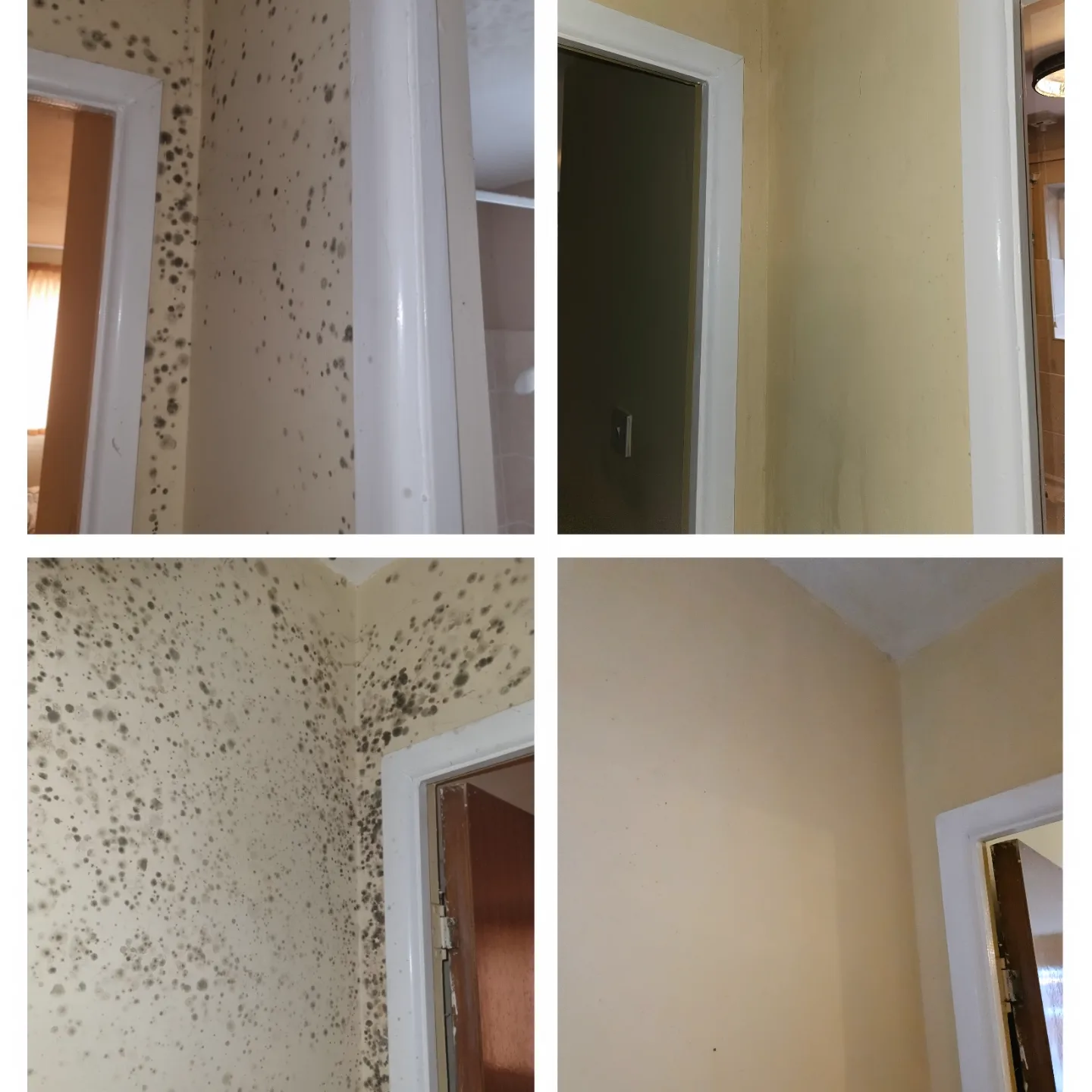
Moulds are fungi found indoors and outdoors. They grow as networks of fine structures and can produce spores that travel through air and settle on materials. Background spores are a normal part of the environment; complete removal of every indoor spore is not a realistic goal. The practical objective is to prevent persistent growth, deal with contaminated materials and make the underlying environment less favourable.
The US Environmental Protection Agency explains that indoor spores will not grow without moisture. Building materials and dust can supply nutrients, so a damp wall, ceiling or furnishing can create an opportunity. Visible patches indicate a problem worth investigating, but their appearance does not show the full extent. Growth can occur behind finishes, under damaged flooring or in other concealed damp areas where a routine surface wipe cannot reach.
How do condensation, leaks and temperature changes encourage growth?
Condensation occurs when moist air encounters a sufficiently cold surface and water forms on it. Cooking, bathing and some work processes add water vapour to indoor air. Cold surfaces, inadequate ventilation or ineffective heating can contribute to repeated condensation. Leaks, water ingress and other building defects are separate causes that need to be investigated rather than automatically attributing every problem to the occupant.
UK government guidance stresses identifying and addressing the underlying causes of damp and mould. An office with a recurring roof leak needs repair; a room with persistent condensation may need changes to ventilation or thermal conditions. A cleaning-only instruction can leave the source unchanged. In storage or transport, temperature changes can contribute to condensation where conditions allow it, so managers should assess moisture, packaging, ventilation and the condition of goods rather than rely on a single chemical treatment.
How quickly can mould develop?
There is no single reliable growth timetable for every species, surface or building. The amount and duration of moisture, temperature, available material and existing contamination all affect what happens. EPA advises drying water-damaged areas and items within 24 to 48 hours where possible to help prevent growth. This is a prompt-action prevention target, not a promise that every surface is safe before a fixed deadline.
For organisations, the useful response is to act on water damage quickly. Record when a leak or flood occurred, stop the source if safe, arrange appropriate drying and inspect affected materials. Delaying because a patch is not yet visible can allow a concealed problem to develop. Where floodwater is contaminated or the damage is extensive, specialist assessment is more appropriate than treating the incident as an ordinary housekeeping task.
What can mould exposure do to health?
CDC explains that exposure may cause no effects in some people, while others can experience nasal symptoms, sore throat, cough, wheeze, eye irritation or a rash. People with asthma or mould allergies may have stronger reactions. Those with weakened immune systems or chronic lung disease can face additional risks, including particular fungal infections. These distinctions are important: exposure does not inevitably mean infection, and symptoms cannot be diagnosed from a photograph of a wall.
UK damp-and-mould guidance identifies health risks and the need to protect people who may be especially vulnerable. A workplace, care provider or accommodation manager should take reports seriously and arrange timely investigation. People concerned about symptoms should seek appropriate medical advice. Avoid claims that all black-coloured mould is uniquely toxic, that every patch causes the same illness, or that a treatment certificate proves a person’s health problem has been resolved.
Why visible mould removal and invisible contamination are different issues
Visible growth is only part of the assessment. Spores and fragments can be present in dust or air, and material may be affected behind the surface. Disturbing growth can release particles, so removal should use an appropriate controlled method, with suitable protection and attention to adjacent areas. An environmental treatment claim should distinguish between reducing viable microorganisms and physically taking away contaminated material.
EPA makes the key point that dead mould can still cause allergic reactions. Killing growth is therefore not the same as complete remediation. Contaminated porous materials, including some ceiling tiles and carpets, may be difficult or impossible to clean fully and can need removal. Hard surfaces may be cleaned and dried using suitable methods. Painting over mould or enclosing damp material without addressing the cause can hide rather than solve the problem.
What does a sound remediation plan include?
Begin with an investigation of the moisture source and the extent of affected material. Repair leaks or other defects, arrange effective drying and assess ventilation and thermal conditions where condensation is involved. Plan safe physical cleaning or removal, protecting people who could be more vulnerable. The appropriate approach depends on the building, extent of contamination and local safety requirements; general household advice is not a substitute for a complex commercial remediation plan.
After the work, check that the moisture problem has actually been corrected and affected areas are dry. Review recurring stains, odours, water damage and complaints rather than relying solely on whether the surface looks freshly painted. A documented follow-up is especially useful for housing providers and facilities teams. Normal background spores may still exist, but recurrence becomes less likely when the conditions that enabled persistent growth have been addressed.
Why conventional deep cleaning alone may not stop mould returning
Deep cleaning has a useful role in removing dirt and contamination, but it cannot repair a roof, eliminate a plumbing leak or correct a cold damp surface by itself. Repeatedly cleaning a patch while moisture remains can leave the conditions for new growth in place. That is the accurate limitation, rather than a blanket statement that conventional cleaning does not work. Physical removal remains essential even when a disinfectant is considered.
EPA does not recommend routine biocide use as the standard approach to mould clean-up and explains that complete sterilisation is neither generally possible nor desirable. These sources must not be described as endorsements of fogging. Where a specialist assessment supports supplementary Sanondaf decontamination, the method and product must have relevant validation and be integrated with moisture repair, drying and material removal—not sold as a cure for damp.
Approved organisations can ask about equipment leasing or a hybrid supervised service as part of an assessed programme. Any supplementary treatment should be assessed against product-specific evidence and safety instructions, including unoccupied-area preparation, operator training, contact periods and safe re-entry requirements. Do not promise that fogging reaches mould inside sealed cavities or makes damaged carpets suitable to retain. The durable benefit comes from a coordinated response: investigate the cause, repair and dry, physically remediate, and use any justified additional disinfection with clear limits.
Frequently asked
- Can mould grow again after treatment?
- Yes, especially if moisture persists or contaminated materials remain. Treatment does not replace repairing the cause, drying and appropriate physical remediation.
- Is killing mould enough?
- No. EPA explains that dead mould can still cause allergic reactions, so contaminated material needs appropriate physical removal or cleaning.
- Can we remove every indoor mould spore?
- Complete removal is not realistic. Control persistent moisture and remove growth; do not use a zero-spore promise as a remediation target.
Sources and further reading
- UK government: damp, mould and health risks
- CDC: mould and health effects
- EPA: mould, moisture and remediation
- EPA: biocides, dead mould and physical removal
- Sanondaf: equipment, application and validation
- Sanondaf: organisational leasing and operator support
Commercial terms are confirmed at survey. Product efficacy depends on the validated application and conditions.