
Infection science
How viruses spread and infect the body: what organisations need to know
An office can look immaculate and still experience a wave of respiratory illness. A nursery can have a reliable cleaning contractor and still face a vomiting bug. That does not mean cleaning is pointless: it means different viruses use different routes, and preventing infection needs more than one control. This guide explains the biology in plain English and separates what surface hygiene can achieve from what it cannot.
In short
Viruses must enter suitable living cells to reproduce. Different viruses spread through respiratory particles, contaminated hands, surfaces, food or other routes. Cleaning reduces surface contamination, but cannot by itself prevent inhalation of infectious particles or new contamination from people. Combine appropriate cleaning and disinfection with hand hygiene, cleaner indoor air and illness policies.
8 min read ·
What is a virus, and why does it need your cells?
A virus contains genetic instructions, in the form of DNA or RNA, enclosed in a protein coat; some also have an outer envelope. The US National Human Genome Research Institute explains that a virus cannot replicate alone. Instead, it must infect a cell and use components of that host cell to make copies. This is an important difference from bacteria, which are cells and can reproduce independently when conditions suit them.
Outside a host, a virus may remain infectious for a period, but it does not multiply on a desk simply because the office is warm. How long infectivity persists depends on the particular virus and the environmental conditions. There is no single survival time that safely describes every virus on every surface, and detecting viral genetic material does not necessarily establish that an infectious virus remains.
How do viruses move from person to person?
Respiratory infections can spread when infectious people release virus-containing particles into shared air. Breathing, speaking, coughing and sneezing can all contribute. Another person may inhale those particles or receive them on exposed mucous membranes. NHS COVID-19 guidance explains that spread is more likely indoors and in crowded places. Ventilation addresses this route in a way that wiping a tabletop cannot.
Other viruses rely heavily on different routes. NHS norovirus guidance describes spread through close contact, contaminated surfaces and contaminated food. Hands can transfer contamination to the mouth or food. Vomit and diarrhoea incidents therefore need a specific response, not simply the same routine used for a dusty meeting room. Some viruses also spread through blood, sexual contact or insect bites; those routes require their own precautions.
How does a virus establish infection inside the body?
Exposure is the opportunity for contact; infection is what happens if the virus successfully establishes itself. In general, a virus must reach cells that it can infect, attach to suitable structures and get its genetic material into the cell. It then redirects cellular processes to produce viral components. New viral particles can be assembled and released, potentially reaching other susceptible cells. The precise mechanism varies between viruses.
The location of susceptible cells helps explain why different infections affect different tissues. A respiratory virus may cause problems in the airways, whereas a gastrointestinal virus affects the digestive system. The immune response attempts to control infection, and both tissue damage and that response can contribute to symptoms. Illness severity varies with the virus and the individual; this article is not a diagnosis or a substitute for medical advice.
Why can infection spread before everyone knows there is a problem?
Not everyone who carries a virus has obvious symptoms at the same point in their infection. Some infections can be transmitted before symptoms develop or when symptoms are mild. A visibly healthy colleague is therefore not proof that there is no transmission risk. Equally, not every cough is an infection: organisations should use clear, proportionate policies rather than guessing diagnoses or blaming particular people.
The operational lesson is to maintain basic precautions continuously. Make handwashing practical, keep toilets and food areas supplied, provide appropriate tissues and bins, and make it realistic for people to follow illness guidance. For norovirus, the NHS advises staying away from school or work until at least 48 hours after the last vomiting or diarrhoea episode. Its advice also says alcohol hand gels do not kill norovirus; soap and water are important.
Which prevention measures address which transmission route?
Good handwashing helps remove contamination that could otherwise reach the mouth, nose or eyes. Respiratory hygiene and suitable illness policies reduce opportunities to expose other people. Ventilation and other appropriate cleaner-air measures address particles in shared indoor air. Vaccination, where recommended, can reduce the risk of particular infections or severe illness. None of these should be replaced with an environmental treatment claim.
Surface cleaning removes dirt and reduces germs. Disinfection is a separate process intended to inactivate specified microorganisms under stated conditions. CDC community guidance advises cleaning before disinfection because dirt and impurities can interfere with chemical action. Use the correct product and application method, follow contact times and safety instructions, and follow sector-specific protocols in healthcare or food production rather than treating general office advice as a clinical standard.
Why conventional deep cleaning alone may not stop a viral outbreak
A thorough deep clean is useful, and official guidance does not support saying it is generally ineffective. Its limitation is scope: it cannot prevent an infectious person releasing new respiratory particles, permanently protect a surface from the next contaminated hand, or guarantee correct disinfection of every exposed item. A room that looks clean is not a measurement of infectivity, but neither is fogging evidence that every route has been controlled.
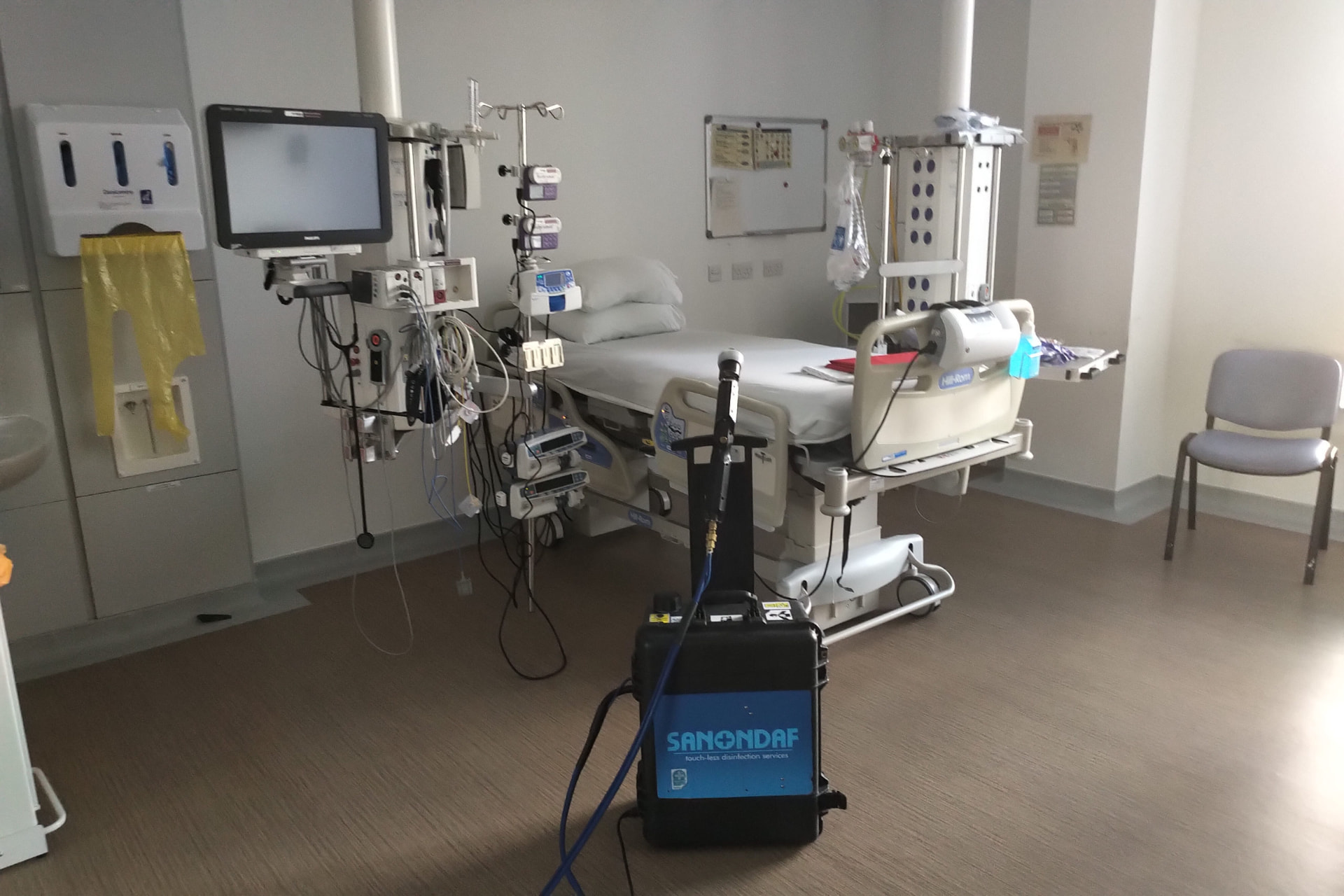
For suitable organisational settings, a risk-assessed Sanondaf programme can add a supplementary disinfection step after physical cleaning. Any proposed treatment should be assessed against product-specific evidence and applicable safety instructions. Trained staff should prepare an unoccupied room, use the specified machine and solution, follow its contact-period and safe re-entry requirements, and record completion. Coverage and effectiveness depend on the application, access and conditions; do not assume treatment reaches sealed cupboards or the interiors of equipment.
CDC guidance distinguishes older routine chemical fogging recommendations from newer room-decontamination technologies, including vaporised hydrogen peroxide, and does not provide a blanket endorsement of those newer methods. That distinction matters: our service should be judged against its own relevant validation and your site risk assessment, not described as universally recommended by CDC. A lease for approved organisations supports planned access and a hybrid supervised response, while ventilation, cleaning and hand hygiene remain essential.
Frequently asked
- Can viruses multiply on furniture?
- They need suitable living cells to replicate. Infectious virus may persist on surfaces for a variable period, but does not reproduce on an ordinary desk.
- Will a deep clean stop airborne transmission?
- Surface cleaning does not prevent people releasing respiratory particles into shared air. Appropriate cleaner-air measures and illness policies address that route.
- Does a fogger replace handwashing or ventilation?
- No. It is a supplementary, application-specific environmental disinfection method, used after cleaning in unoccupied rooms with appropriate controls.
Sources and further reading
- NIH / NHGRI: what a virus is
- NHS: catching and spreading COVID-19
- NHS: norovirus symptoms and prevention
- CDC: when and how to clean and disinfect a facility
- CDC: disinfection recommendations and fogging clarification
- Sanondaf: equipment, application and validation
- Sanondaf: organisational leasing and operator support
Commercial terms are confirmed at survey. Product efficacy depends on the validated application and conditions.