
Healthcare
NHS disinfection fogging machines: where they fit in a clinical cleaning plan
For an NHS trust, medical centre or clinical facilities team, a fogging machine is not a substitute for everyday infection prevention. It is a possible additional step for selected rooms, subject to the local infection prevention and control (IPC) team’s assessment, the product instructions and safe room handback.
In short
NHS disinfection fogging machines can support a documented, risk-assessed room decontamination programme after cleaning, but they are not an NHS-approved shortcut. Clinical teams should agree indications with their IPC and estates leads, verify evidence for the particular machine-and-solution process, treat unoccupied rooms, and follow contact, ventilation and re-entry instructions.
6 min read ·
What comes before any fogging cycle?
NHS England’s national infection prevention and control manual places hand hygiene, equipment care, environmental cleanliness and transmission-based precautions within the same framework. Start with the local IPC policy, routine surface cleaning, removal of visible soil and a clear division of responsibility between clinical, domestic and estates teams.
No fogging process should be used to excuse missed high-touch surfaces, poor hand hygiene or an incomplete clean. Where a supplementary whole-room treatment is appropriate, the manual clean happens first; the treatment then follows a specified process with the right equipment and chemistry.
- Agree the room and reason for treatment with the local IPC team
- Clean visible soil and high-touch points first
- Document trained operators, room preparation, treatment parameters and handback
Where might a fogging machine be considered?
A side room after a patient has left, a defined clinical space between uses or a room with a specific environmental risk may prompt a discussion. Whether the method is appropriate depends on the organism, the room, local policy, equipment compatibility and available validation evidence; it is not a universal prescription for every ward.
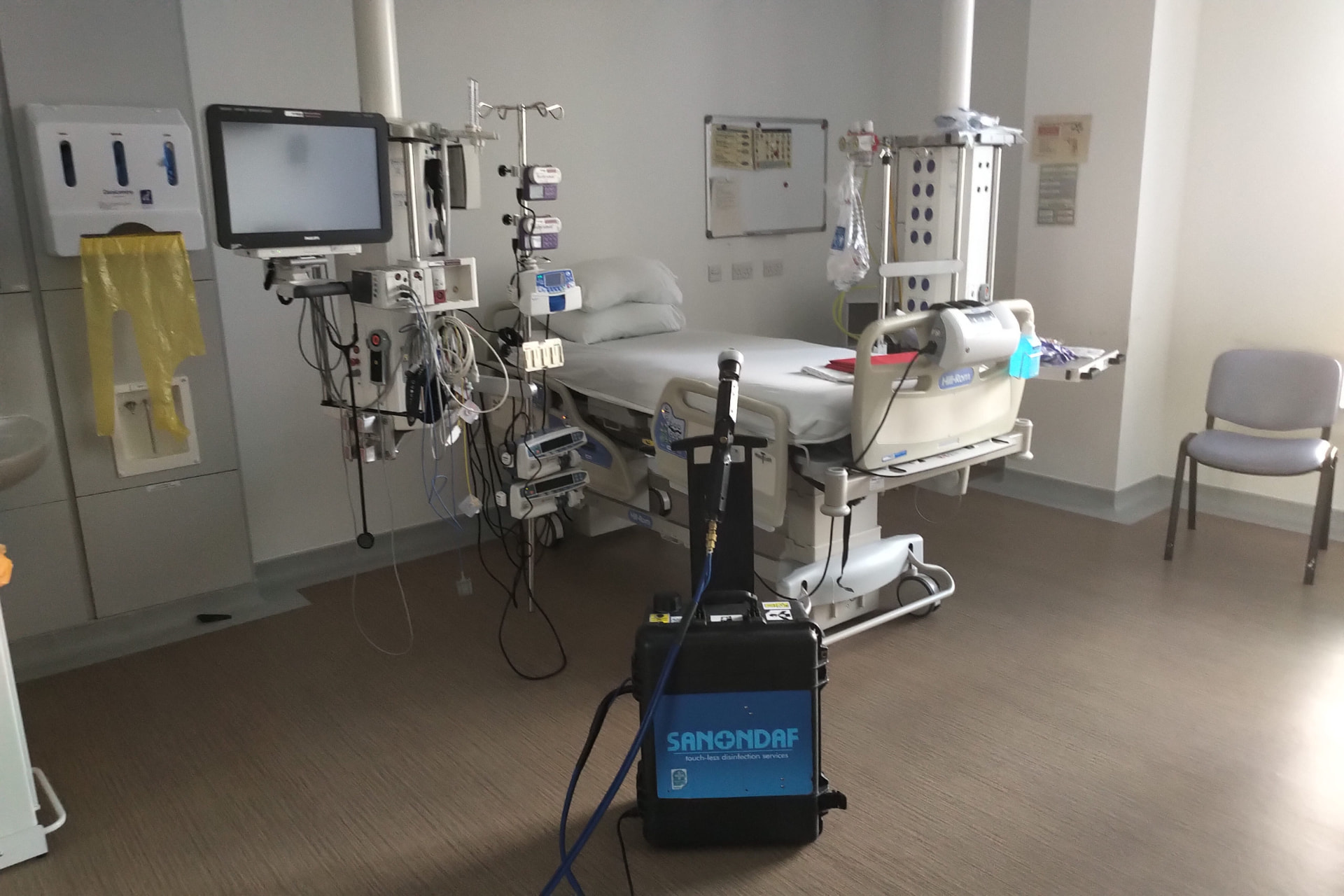
Sanondaf has published a case study of hydrogen peroxide-based decontamination in a live critical-care setting. That case study illustrates an application, not proof that every trust has endorsed this method or that an identical outcome is guaranteed in another building.
What should procurement and IPC ask the supplier?
Ask for evidence for the actual machine, disinfectant, delivery method, organism and cycle proposed, rather than a broad claim about ‘hospital-grade’ chemistry. Check the approved use instructions, COSHH assessment, exposure controls, material compatibility, staff training, ventilation and safe re-entry criteria.
Treat only unoccupied spaces and keep people out until the specified conditions for re-entry are met. The operator should record what was cleaned, when the cycle ran and who released the room back to service. A certificate documents an event; it cannot certify that infection transmission has been eliminated.
When does a lease help?
For an organisation with repeat suitable rooms, an on-site machine can make it easier to schedule approved treatments around bed changes, room turnaround or planned closure periods. The Shropshire & West Midlands office coordinates training and support, backed by the wider Sanondaf network.
The fixed monthly lease is separate from solution consumption and does not rise solely because another suitable room is included in the rota. Whether that offers value is secondary to the IPC assessment and the safety of the process.
Frequently asked
- Are Sanondaf foggers NHS approved?
- Do not infer NHS approval from use in a healthcare setting. Each organisation should make its own IPC, procurement and safety assessment for the proposed machine, solution and application.
- Can you fog a room while patients or staff are inside?
- No. The room should be unoccupied for a fogging cycle, with access controlled until the specified re-entry conditions are met.
- Does fogging replace terminal cleaning?
- No. Where appropriate, it is a supplementary decontamination step after the required manual cleaning, under the local IPC procedure.
Sources and further reading
- NHS England: national infection prevention and control manual
- Sanondaf: critical care unit case study
Commercial terms are confirmed at survey. Product efficacy depends on the validated application and conditions.