
Leasing guide
In-house fogging machine vs external contractor: the real-life comparison
The invoice is the smallest part of a contractor visit. Around it sits an hour or more of your own team's time: finding someone, agreeing a quote, raising a purchase order, meeting them at the door, sitting through inductions, escorting them, checking the work, walking them out and processing their invoice. A trained colleague with a machine already on site skips the lot — and can have the room treated while the other option is still on hold.
In short
An external disinfection visit carries hidden time: sourcing and vetting a contractor, quote approval, purchase orders at various levels, health and safety videos, inductions, escorting, checking the work and a separate invoice per visit. A leased Sanondaf machine on site means your own trained staff deploy in around ten minutes once the area is prepared, with no extra lease cost however many rooms you treat — only the solution. For anything unfamiliar, our hybrid service attends with you at a reduced rate.
7 min read ·
What does an external visit actually cost you in time?
Nobody budgets for it, but every contractor visit consumes your own people's hours. Before anyone arrives, someone has to find a good contractor, check they are competent and insured, compare quotes, get the job authorised — and if it is urgent, chase a purchase order through however many levels of approval your organisation has.
When they arrive, someone directs them to the right department, sits them through the health and safety video, the questionnaire and the induction, sorts a visitor badge or key card, and stays available in case they need help. Afterwards, someone checks the work, walks them back to estates to sign out, then generates, authorises and pays a fresh invoice — for every single visit.
- Before: sourcing, vetting, comparing quotes, authorising the job or raising a PO
- At the door: sign-in, inductions, H&S videos, questionnaires, badges and key cards
- During: staying available, answering questions, keeping them to the right areas
- After: checking the work, escorting out, reconciling and paying a separate invoice each visit
And what does the same job look like with a machine on site?
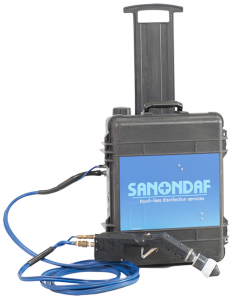
Your own trained colleague picks up the 8kg machine from its cupboard and starts. Once the area is prepared, a treatment can begin in around ten minutes — at roughly the point where the alternative is still on Google trying to find a contractor, let alone one who answers the phone.
There is no red tape to cut because the authorisation already exists: the lease is agreed, the operator is trained and signed off, and the room is treated to a procedure your organisation approved. The fogger does its cycle, a sign goes on the door, and where the validated process and site conditions allow, the room is back in use within the hour.
What happens when there is no budget for a contractor?
This is where the comparison stops being theoretical. A flu bug tears through the office, the callout fee is not in anyone's budget, and the choice becomes: wait, or do nothing. With a leased machine, neither happens — you leapfrog the machine in and treat the affected rooms today.
Because the monthly lease does not rise however many rooms you treat, the extra rooms cost only the solution. The same machine that does the routine rounds handles the outbreak, the second week of the outbreak, and the offices next door as a precaution. No new quote, no new PO, no new contractor to brief.
- Outbreak in the office, no decontamination budget: leapfrog the machine in
- Second wave in another department: same machine, same day, only the solution cost
- No per-visit fee, no per-room lease increase — predictable spend however busy it gets
What does it do for staff morale and retention?
Staff notice when an outbreak is left to run its course because treatment is too slow or too expensive to book. They also notice when the sick room is treated the same morning, the canteen is on a routine rota, and dated certificates appear in the areas they use every day.
A visible, planned programme tells your own people their workplace is looked after — and it gives the trained operators a recognised skill inside their existing role, rather than another task dumped on top of it. Prevention that people can see is worth more to morale than a reactive clean-up nobody sees.
Where does the hybrid service fit?
Leasing is not 'you are on your own'. If you have a large event, an unfamiliar space or an outbreak that feels beyond the routine, we attend with our own machines at a reduced rate and organise or supervise the treatment alongside your team. Your staff learn on a live job, the first one is done properly, and afterwards you run it yourselves.
That is the hybrid: the machine and the routine are yours, and Sanondaf experience is a phone call away when you want it — from the Shropshire & West Midlands office, backed by the wider UK and international network.
Is in-house treatment cutting corners?
No — the safeguards are the same either way. Your trained operators clean first, prepare an unoccupied room, follow the risk assessment, keep people out for the dwell time and check re-entry conditions before the sign comes down. What disappears is the visitor logistics, not the discipline.
If anything, the discipline improves: the people treating the room know the building, know the hygiene controls and work to your site standards rather than being briefed on them fresh each visit.
Frequently asked
- How quickly can our own staff start a treatment?
- Once the area is prepared, a trained operator can typically start within around ten minutes. That compares with hours — sometimes days — for a contractor to be found, quoted, approved and on site.
- What if we cannot justify the budget for contractor callouts?
- That is the strongest argument for a lease. One fixed monthly payment from £450 + VAT covers the machine however many rooms you treat, so an outbreak no longer needs a new budget line or an emergency purchase order — only the solution cost.
- Do more rooms mean a higher lease payment?
- No. The monthly machine lease is fixed; extra rooms only use extra solution. Treating the offices, canteen and welfare areas as routine costs no more in lease than treating one room.
- What if a job feels too big for our own team?
- Use the hybrid service: we attend with our own machines at a reduced rate and organise or supervise alongside your staff, so your team gains confidence on a live job and runs it independently afterwards.
Sources and further reading
Commercial terms are confirmed at survey. Product efficacy depends on the validated application and conditions.