
Warehousing & logistics
A shift of pickers goes down together and the SLA does not flex
Absence in a distribution operation does not arrive politely. A shift goes down together, agency cover gets expensive at exactly the wrong notice period, throughput slips and the service level agreement with your customer does not have a clause about the norovirus season.
In short
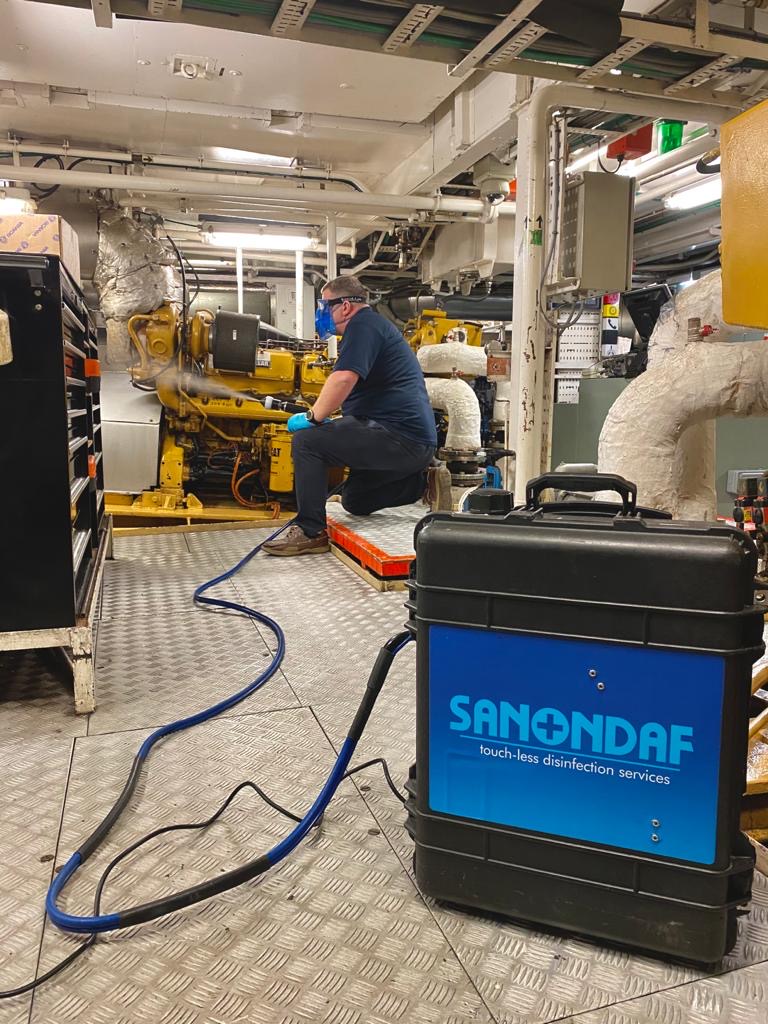
Fog cabs, handhelds, canteens and welfare areas between shifts with your own trained staff. It stops the shared-equipment handover that spreads illness across shift patterns, at roughly £10–£12 + VAT per treated area.
5 min read ·
Shared kit is the transmission route
Pickers hand over handhelds. Drivers hand over cabs. Everyone shares the canteen, the microwaves, the lockers and the smoking shelter. A site can be spotless on the floor and still be moving illness perfectly between shifts.
Treating those specific spaces between shifts is a small, repeatable intervention with an outsized effect on absence.
It fits the shift changeover you already have
There is already a gap between shifts. Facilities or hygiene staff, trained as operators, treat the welfare block and cab park in short cycles inside that gap, with door cards showing safe entry times.
No residue means handhelds, scanners, screens and cab electronics are unaffected.
- Canteens, locker rooms, washrooms, offices and gatehouses
- Vehicle cabs and shared handheld charging stations
- Cold stores and pick faces where required
- Preventative rota through the winter rather than reactive treatment
What it is worth
The return here is measured in avoided agency cover and protected throughput, not in cleaning budget. One prevented multi-shift absence event typically covers a large part of an annual lease from £450 per month + VAT.
Frequently asked
- Does the whole warehouse need treating?
- Rarely. Most sites focus on welfare areas, offices, cabs and shared equipment — the spaces where people and handovers concentrate.
- Can it be used in a cold store?
- Cold store suitability and cycle parameters are confirmed at survey against the specific temperature and volume.
- Who operates it?
- Trained site staff. Operator training is included in the lease and only trained, competent staff may operate the machine.
Sources: material published by Sanondaf UK at sanondaf.co.uk (news, research and case studies) and the technical and commercial documentation held by the Shropshire & West Midlands office. Figures are indicative and confirmed at survey. Efficacy is stated as up to 99.9999% reduction.