
Yachts & marine
A crew member falls ill offshore, days from a port that could help
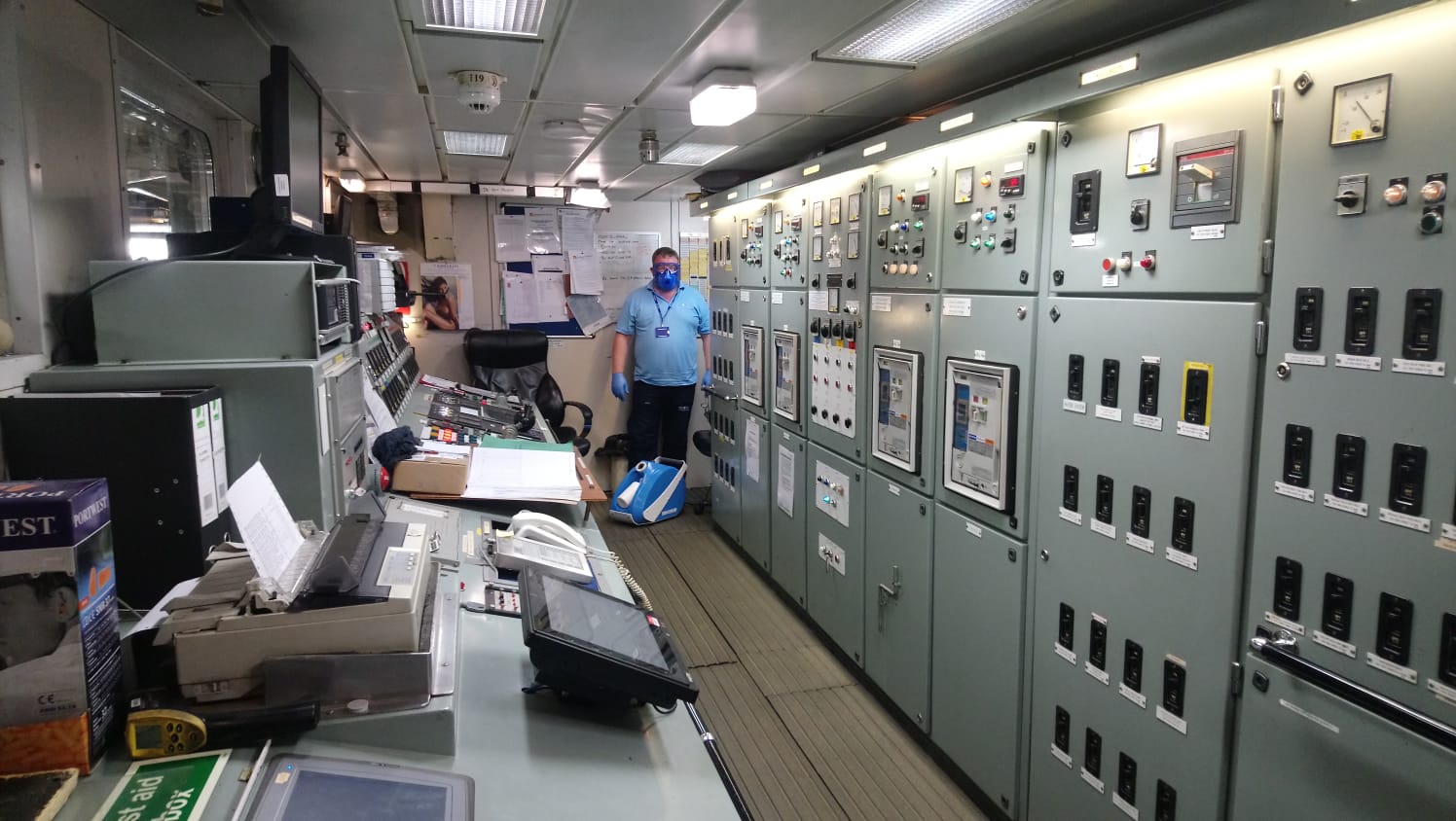
Day four of the passage, and a crew member reports symptoms. Accommodation is shared, the heads are shared, the mess is shared, and the charter or survey window is fixed. The nearest port that could send anyone out is days away. Whatever happens next happens with what is already aboard.
In short
Keep a unit in the locker and train crew as operators. Cabins, mess and heads are treated at sea in short cycles with a log for the vessel's records, instead of waiting 24 to 120 hours for a shore-based team.
6 min read ·
Distance is the variable nobody controls
Shoreside response for a vessel away from port is realistically 24 to 120 hours. That is not a supplier failing, it is geography. For a small crew in shared accommodation, that window is more than enough for one case to become several.
On-board capability removes the variable entirely. Response starts in about five minutes, at sea, in any weather that allows normal work.
What gets treated aboard
Cabins, mess, galley, heads, wheelhouse and shared workspaces. The machine is hand-portable at 8kg and needs no installation, so it stows in a locker and comes out when it is needed.
The hydrogen peroxide based disinfectant leaves no corrosive residue on navigation electronics, radios or engine room instrumentation, and breaks down to water and oxygen.
- Whole-volume treatment reaching bunk voids, lockers and vent grilles
- Cycles logged for the vessel's records and for port health questions
- Preventative treatment at crew change, not only after illness
- Up to 99.9999% reduction achievable under validated conditions
Experience from vessels, not brochures
Our hybrid service teams have carried out attended treatments aboard vessels including Marine Scotland offshore patrol vessels and the research vessel MV Scotia, Calmac ferries, Stena Line, Western Ferries and offshore platforms. Those were attended treatments rather than leases, and they are the source of the practical detail here — how to sequence cabins around watches, and how to keep a log that satisfies questions later.
Frequently asked
- Can crew be trained without coming ashore?
- Training is delivered on site, which for marine clients usually means aboard, alongside handover of the operating procedure and door cards.
- Is the equipment suitable for stowage at sea?
- The unit is compact and hand-portable at 8kg with no installation requirement; stowage arrangements are agreed at survey.
- Can you attend the first treatments?
- Yes. We can attend with machines at a reduced rate as a hybrid arrangement and supervise the first treatments before your crew takes it on.
Sources: material published by Sanondaf UK at sanondaf.co.uk (news, research and case studies) and the technical and commercial documentation held by the Shropshire & West Midlands office. Figures are indicative and confirmed at survey. Efficacy is stated as up to 99.9999% reduction.