
Mould
Mould fogging: treating the spores hand cleaning leaves behind
Mould is a spore problem, not a stain problem. Wiping a wall removes the evidence and disturbs the spores; a whole-volume fog treats the air and the surfaces the cloth never reached.
In short
Mould fogging treats mould and yeast contamination throughout a room's volume, including the airborne spores and hidden surfaces wiping leaves behind. Cycles run in minutes with no residue, so housing, education, food and logistics teams can run preventative rounds on a schedule — and with a machine on site, damp and mould treatment starts in around five minutes rather than waiting for a contractor.
5 min read ·
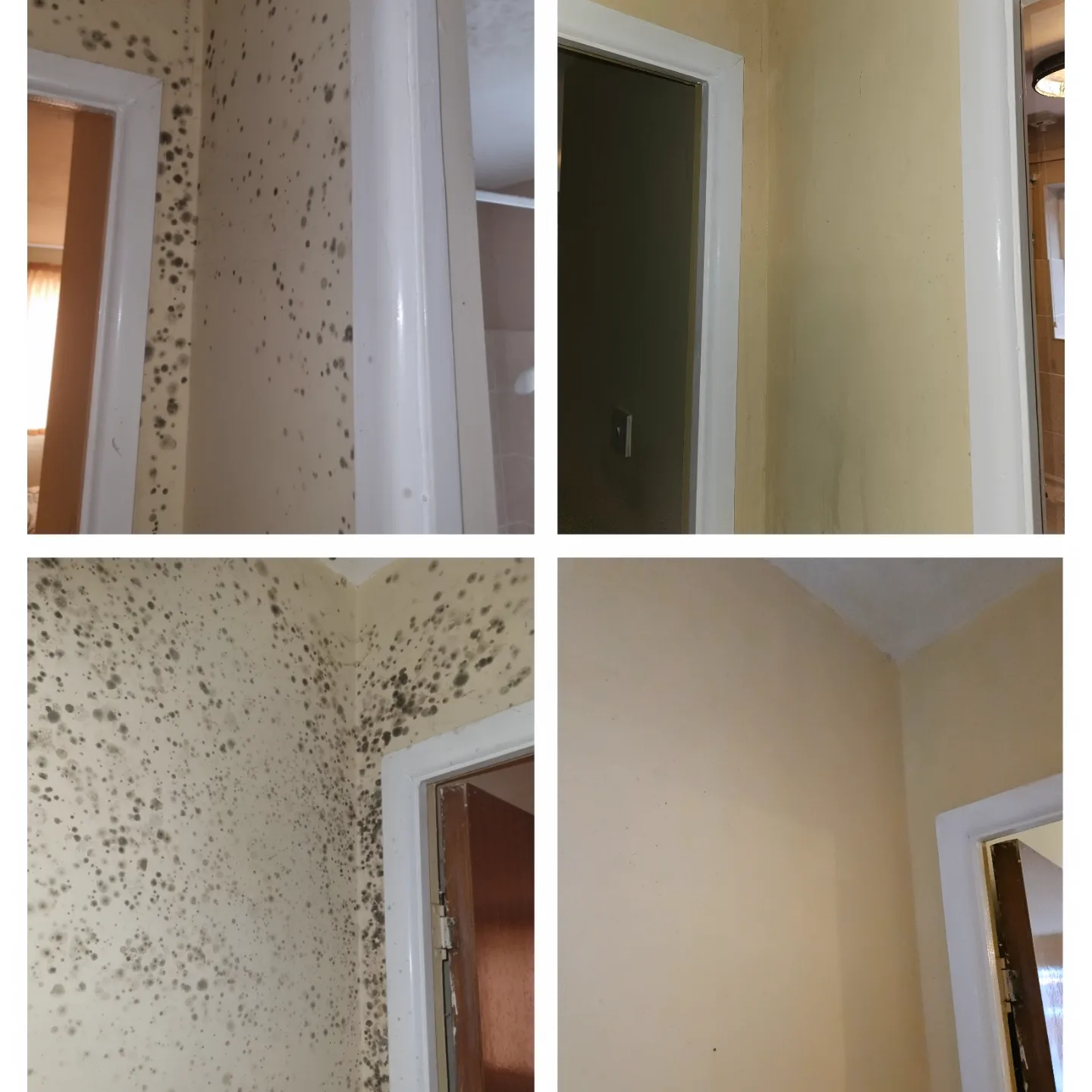
Why doesn't wiping mould down solve the problem?
Sanondaf's published work on the decontamination and removal of mould and yeast contamination in a laboratory setting describes how quickly this contamination spreads in a building, damaging equipment, compromising samples and closing space — and why whole-volume treatment reaches surfaces that hand cleaning misses.
The same principle applies to a damp bedroom, a student flat, a food store or a shipping container: treat the volume, not just the visible patch.
How does mould fogging help with damp, mould and Awaab's Law?
Social landlords now work to statutory timescales for investigating and acting on damp and mould hazards. A leased machine on site means the treatment step starts in minutes rather than sitting in a contractor queue, and it gives you a dated, evidenced treatment record for each property.
Because it is hand-carried at 8kg, one operative covers multiple properties in a day without wheeling equipment through occupied homes.
- Treatment starts in around five minutes, not 6–24 hours
- Evidenced, repeatable cycles for compliance records
- Preventative rounds during void periods and seasonal damp risk
Why does mould appear in storage and goods in transit?
Import and export moves goods through temperature and humidity changes that encourage growth, and crossing borders can expose stock and product to hostile bacteria, viruses and mould. Deliver it in the truck, drop a machine in, and leave it to work — so that when the doors open, the load is safe.
Combine a fogger with an electrostatic machine and you have more advanced infection control than many hospitals currently run.
Is preventative mould fogging cheaper than remediation?
The cost of a preventative round is a fraction of a remediation, a void period or a complaint. With a fixed lease from £500 per month + VAT and up to five rooms treated per hour, mould rounds become scheduled maintenance rather than an emergency budget line — and whatever the next outbreak or damp season brings, the premises are already future-proofed.
Frequently asked
- Does fogging remove mould staining?
- Fogging is a decontamination step that treats mould and yeast contamination throughout the room volume. Cosmetic staining and any building fabric or ventilation defect still need addressing — fogging stops the contamination being spread while that work is planned.
- Can we treat occupied housing stock?
- Treatment is carried out in unoccupied space with the room handed back after the short cycle. Because cycles run in minutes, properties come back into use the same visit.
- Is the chemistry safe to use in homes and food areas?
- The hydrogen peroxide based chemistry breaks down to water and oxygen and leaves no residue or waste output, which is why it is used in food, clinical and residential environments.
Sources: material published by Sanondaf UK at sanondaf.co.uk (news, research and case studies) and the technical and commercial documentation held by the Shropshire & West Midlands office. Figures are indicative and confirmed at survey. Efficacy is stated as up to 99.9999% reduction.