
Hospital & medical
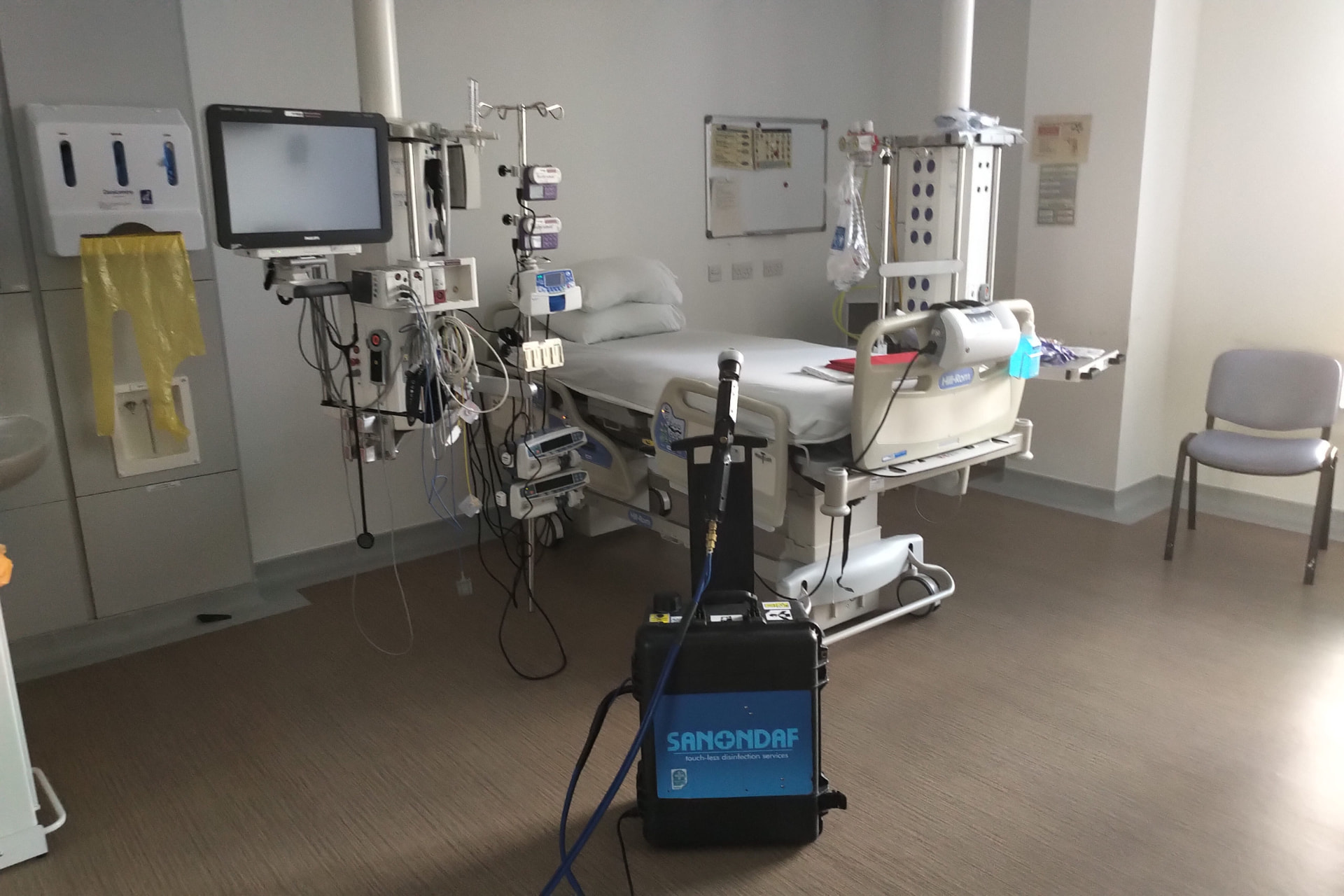
A side room needs a terminal clean and there is a patient waiting for the bed
The room is vacated at 11am. There is a patient in the department waiting for it, and an infection prevention and control standard that says what has to happen first. Every hour between those two facts is a bed you have and cannot use.
In short
A unit on the ward lets trained staff treat the room inside the existing turnaround, so the bed is released the same day with a documented, whole-volume treatment behind it rather than a wipe-down and a hope.
7 min read ·
Bed days are the currency
Terminal cleaning is not a cost centre argument, it is a flow argument. The wait for an external provider is the wait for the bed, and it lands on the same escalation call every time.
Owning the capability collapses that wait to the length of the cycle plus the calculated re-entry time — both measured in minutes and set per room at survey.
What whole-volume adds to a manual clean
Manual cleaning remains essential and nothing here replaces it. Fogging is what happens after the room is cleaned: it treats the volume, including the surfaces above head height, the curtain rails, the equipment left in the room and the en-suite extract.
This is the same technology leased and used by our hybrid service teams in settings including NHS England and Scotland. SanoChem is tested to EN 14476, EN 1276, EN 1650 and related standards, with up to 99.9999% reduction achievable under validated conditions.
- Side rooms, bays, treatment rooms, theatres between lists and ambulance handover areas
- No corrosive residue on monitors, pumps or bed electronics
- Dated certificates for the IPC record and for outbreak reporting
- Response starts in about five minutes rather than 6 to 24 hours
MDRO and the case for routine rather than reactive
Multi-drug resistant organisms are the reason most trusts and private hospitals eventually look at automated room decontamination. The environment is a reservoir, and reservoirs are best emptied on a schedule rather than after a cluster.
At roughly £10–£12 + VAT per treated room, routine treatment of discharge rooms, clinic rooms and shared equipment stores becomes affordable in a way call-out pricing never allowed.
Frequently asked
- Who is permitted to operate the machine on a ward?
- Only trained and competent staff. On-site operator training is included in the lease, and a nominated person can be trained to induct new starters.
- Does the room need to be sealed?
- The room is closed and unoccupied for the cycle and the calculated re-entry period, with a door card showing the safe entry time. Full sealing is not normally required; specifics are set at survey.
- Can we start with supervision before running it ourselves?
- Yes. We can attend with machines at a reduced rate and supervise your first treatments as a hybrid arrangement until your team is confident.
Sources: material published by Sanondaf UK at sanondaf.co.uk (news, research and case studies) and the technical and commercial documentation held by the Shropshire & West Midlands office. Figures are indicative and confirmed at survey. Efficacy is stated as up to 99.9999% reduction.