
Food factories
A positive swab lands tomorrow morning. How long is the line down?
The lab report arrives at 8am and it is positive. The line stops. Your technical manager needs an intervention that can be documented today — not a booking, not an intention. Everyone in the room knows what an hour of stopped production costs, and the arithmetic gets uncomfortable fast.
In short
With a machine on site, the room is fogged between shifts, the line restarts on your schedule rather than a contractor's, and you hold a dated certificate for the audit file. One stopped shift usually costs more than a year of preventative treatments.
7 min read ·
The cost that dwarfs everything else
Nobody in food manufacturing needs persuading that downtime is expensive. The relevant comparison is not fogging versus wiping, it is a documented same-day intervention versus a stopped line waiting for a diary slot.
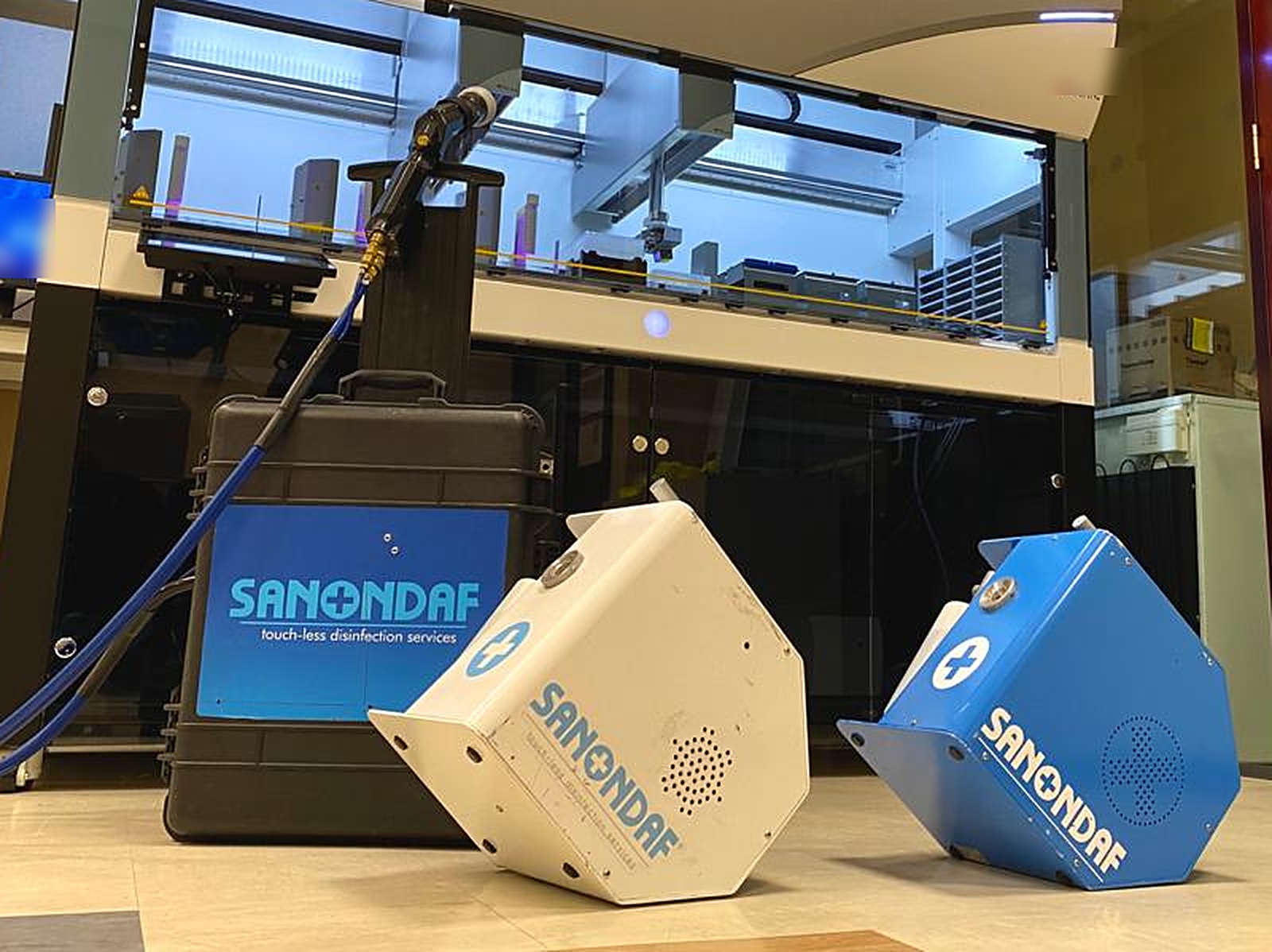
An external emergency call-out is realistically 6 to 24 hours away and costs from £495–£1,095 + VAT each time. A leased machine from £450 per month + VAT is on site before the swab result is.
Whole-volume treatment in a production environment
Production rooms are the definition of hard-to-reach: catwalks, conveyor undersides, drains, ceiling voids, chill room evaporators. Fogging treats the volume of the room, so the treatment does not stop at eye level.
SanoChem is hydrogen peroxide based, breaks down to water and oxygen, leaves no residue to rinse away and no waste stream to dispose of — which matters when the next thing that happens in that room is food production.
- Treatment between shifts or during planned CIP windows
- Chill rooms, changing rooms, canteens and welfare areas on the same cycle
- Dated certificates for BRCGS, customer audits and due diligence files
- Up to 99.9999% reduction achievable under validated conditions
Preventative beats reactive, and the price proves it
Once treatment costs roughly £10–£12 + VAT per room rather than a call-out fee, the whole approach changes. Sites move from treating after a positive to treating on a schedule — weekly for high-care, monthly for ambient stores, quarterly for offices and welfare.
That is also the strongest thing you can show an auditor: a log of routine preventative treatments, not a single panicked one dated the day after a failure.
Fitting it to the shift pattern you already run
Hygiene teams are trained as operators during set-up. The room is cleaned down as normal, the machine goes in with the door card, the team moves to the next area and leapfrogs back. It adds seconds of handling per room, not a new job role.
Frequently asked
- Does the treatment leave residue on food contact surfaces?
- The hydrogen peroxide based disinfectant breaks down to water and oxygen and leaves no residue. Standard site procedures for restarting production still apply.
- Will this satisfy a BRCGS or customer audit?
- Treatments are logged and issued as dated disinfection certificates, which is what audits ask to see. The efficacy data and safety data sheets are supplied with the lease.
- How many rooms can one machine cover?
- One 8kg machine comfortably treats up to five rooms per hour depending on size, so most single sites run one unit and larger multi-hall sites run two.
Sources: material published by Sanondaf UK at sanondaf.co.uk (news, research and case studies) and the technical and commercial documentation held by the Shropshire & West Midlands office. Figures are indicative and confirmed at survey. Efficacy is stated as up to 99.9999% reduction.