
Equipment guide
Fogger hire explained: what a dry fogger really means for your rooms
Fogger is one of those terms that gets used to sell everything from a £60 garden sprayer to a validated hospital decontamination system. The physics is simple enough, and once you understand it you can tell within one question whether a machine is fit for infection control.
In short
A professional fogger uses a small quantity of disinfectant broken into very fine droplets so it disperses through the whole room volume instead of soaking surfaces. Smaller droplets stay airborne longer, cover more area per litre and dry without residue, which is why dry fogging suits occupied buildings that need rooms back in service quickly.
6 min read ·
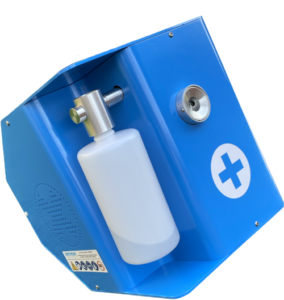
What does a professional fogger actually do?
It atomises a small amount of disinfectant into a very large number of tiny droplets. Because surface area rises sharply as droplet size falls, a modest quantity of chemical can treat a substantial room volume.
The practical consequences are the ones you care about: less chemical per room, faster drying, no puddling on floors or equipment, and a fog that behaves like the air in the room rather than like a spray.
Why does droplet size decide whether it works?
Large droplets fall fast. They wet the floor and the top of the desk, and they never reach the back of the shelving or the underside of the bed frame. Fine droplets stay suspended, follow the airflow and settle evenly across the entire room including surfaces no cloth reaches.
This is why a cheap garden sprayer and a validated fogging system can look identical in a photograph and behave completely differently in a room.
Wet fogging or dry fogging — which do we need?
Wetter fogging suits robust environments: warehouses, bin stores, plant rooms, waste areas. Dry fogging suits everything sensitive: wards, labs, offices with IT, food production, vehicle interiors and cabins.
Most of our leased machines run dry because that is what allows a fast handback with no wipe-down afterwards.
Is fogger hire worth it, or should we lease?
Hiring a fogger for a single job is reasonable. The problem is that a dry fogger's advantages — speed, low chemical use, no residue — are exactly the qualities that make it worth doing routinely, and routine use is what makes hire expensive.
A leased machine from £450–£550 per month + VAT, treating up to five rooms an hour, turns fogging from an event into a line on the cleaning schedule.
Frequently asked
- Is fogging the same as dry fogging?
- Not always. Fogging describes the process; dry fogging describes droplets fine enough that surfaces do not end up visibly wet. Our machines are set up to fog dry.
- How much disinfectant does a fogging cycle use?
- A small amount per room, which is the point of a well-set fogger. Chemical is supplied on account from £15 per litre + VAT, with a 100 litre minimum order.
- Can a fogger handle a large hall or warehouse?
- Yes, with dosing set to the room volume. Large spaces are usually treated in zones, and the survey establishes the dose and safe entry time for each.
- Do we need to cover equipment before fogging?
- Preparation is minimal with a dry fog, but sensitive items and any exceptions for your specific rooms are covered in the operator training and written method.
Sources: material published by Sanondaf UK at sanondaf.co.uk (news, research and case studies) and the technical and commercial documentation held by the Shropshire & West Midlands office. Figures are indicative and confirmed at survey. Efficacy is stated as up to 99.9999% reduction.