
Cruise ships
Four norovirus cabins and six hours to turnaround: what happens next?
The report comes in mid-morning: four cabins, same symptoms, same corridor. You have a same-day turnaround, guests already assembling ashore, and a port that cannot get a shore-based team aboard inside your window. Everything about the next six hours depends on what is already on the vessel.
In short
Hold machines on board and train cabin and hotel staff as operators. Cabins are treated as they are vacated, cycles are logged for the outbreak management plan and port health, and re-entry is typically under an hour so cabins are re-let the same day.
7 min read ·
The gap nobody plans for
Shore-based response is a port-by-port lottery. In some ports it is a phone call; in others it is not happening today at any price. Away from port entirely, realistic response for an external team is 24 to 120 hours.
Meanwhile every hour a cabin sits out of service is a cabin you cannot re-let, and port health will reasonably ask what was done, when, and by whom.
What on-board capability looks like in practice
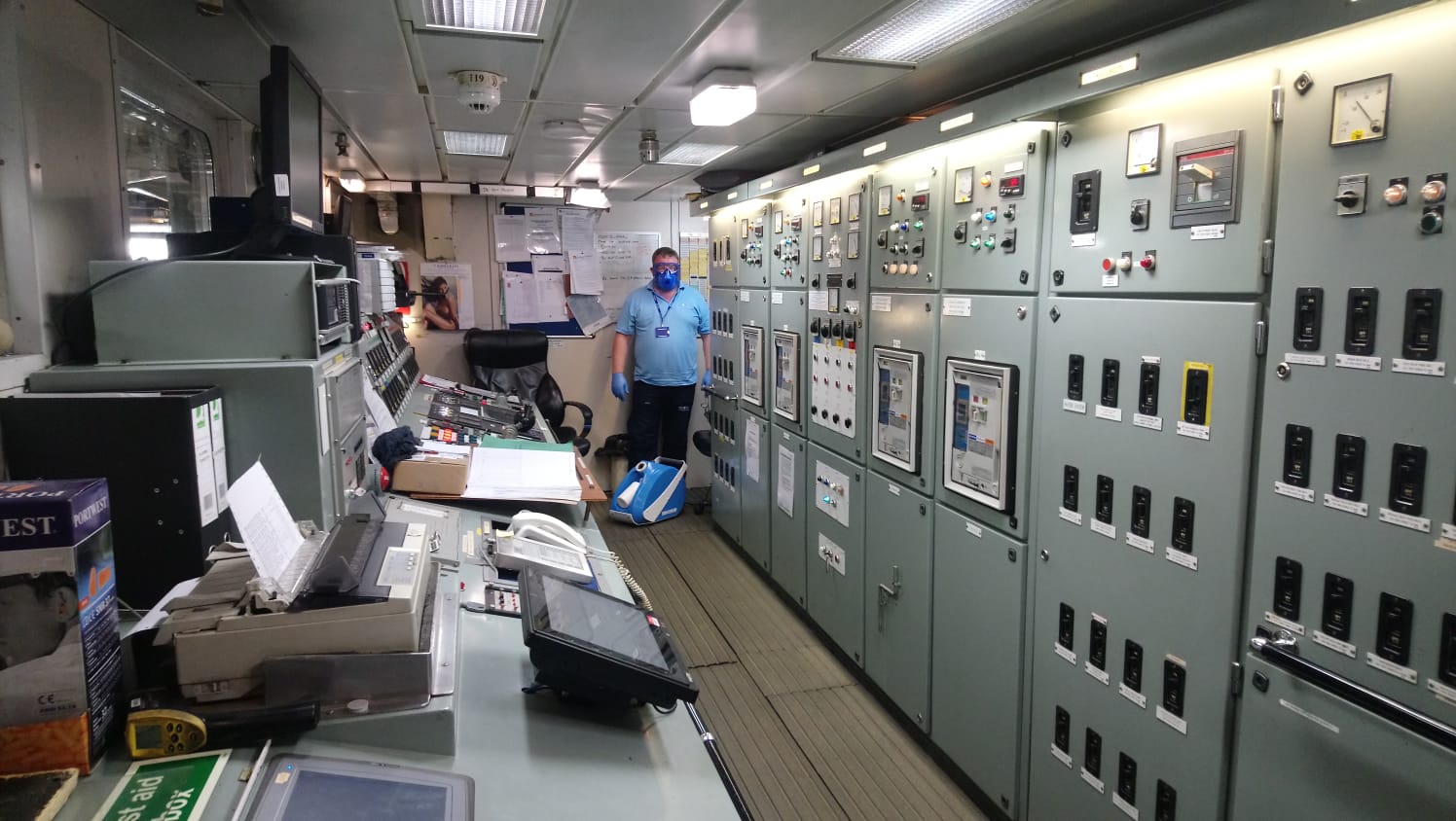
Two leased units held on board, with cabin and hotel staff trained as operators, changes the sequence completely. A cabin is treated as it is vacated, in a short cycle, with the door card showing the safe entry time. Public areas, galleys and crew mess run on a planned cycle between voyages rather than only after an incident.
Because the treatment is whole-volume, it reaches the wardrobe interiors, the bathroom extract, the soft furnishings and the void behind the bed frame — the places a cloth never visits.
- Treatment begins within minutes of a cabin being reported, with no port dependency
- Documented cycles for the outbreak management plan and port health questions
- Crew quarters and galley included in the routine, not only affected cabins
- Re-entry typically under an hour, so cabins are re-let the same day
Evidence, not assurances
SanoChem is tested to EN 14476, EN 1276, EN 1650 and related standards, with up to 99.9999% reduction achievable under validated conditions. Each treatment can be logged and issued as a dated disinfection certificate.
Our hybrid service teams have worked aboard vessels including Marine Scotland offshore patrol vessels and the research vessel MV Scotia, Calmac ferries, Stena Line and Western Ferries, as attended treatments rather than leases — which is where a lot of the practical, at-sea detail in this guide comes from.
If you would rather see it done first
Operators often start with a supervised event: we attend with machines at a reduced rate, run the first treatments alongside your crew, and hand over once the routine is settled. It is the fastest way to turn a written plan into something the hotel department actually owns.
Frequently asked
- Can crew be trained to operate the machines at sea?
- Yes. On-site operator training is included, and only trained and competent crew may operate. We can also train a nominated person to induct new joiners between voyages.
- Is the treatment suitable for cabins with soft furnishings?
- Yes. The hydrogen peroxide based disinfectant leaves no residue and breaks down to water and oxygen, so soft furnishings, screens and electronics are unaffected.
- How is this evidenced to port health?
- Every treatment can be logged and issued as a dated disinfection certificate recording the space treated, the operator and the cycle.
Sources: material published by Sanondaf UK at sanondaf.co.uk (news, research and case studies) and the technical and commercial documentation held by the Shropshire & West Midlands office. Figures are indicative and confirmed at survey. Efficacy is stated as up to 99.9999% reduction.